Fielding 008: Beyond These Winters

Six years have come and gone since my last “fielding,” and there have been days when I’ve nearly given up.

Backpacking.

Planning for a day when I could return to dreaming.

All of my projects. Everything.

Life changed in ways that crushed whatever plans I’d been making to hike the Appalachian Trail (AT). There would be no grand hike overseas. I had wanted to hike parts of the International Appalachian Trail (IAT), which I was just beginning to learn about. I had corresponded with the co-chair of the IAT about hiking in Newfoundland, but that was before everything changed.

My dad’s death was the first of many passings–shocking because we didn’t know he had cancer until he had a month to live. The larger world mourned the loss of people and plans that we once took for granted as doors closed, funding stopped, and people stayed home.

Every day since then I’ve wondered: will I ever get back to where I was?

Even after the pandemic lifted and I resumed day-hiking on the AT, so much was gone.  My job consumed me, my health eroded, and family matters took more of my time.

Years passed, and I took another job. I left East Tennessee and the mountains I still consider my home, and relocated to northwestern Ohio.

The landscape here is flat; far more than the hills of southeastern Ohio where I’d once lived as a grad student. It’s cold in the Midwest. It’s also hot, depending on the season. We have droughts and ice storms and tornado sirens that blast the first Friday of every month at noon. The university is small, but once more, my job takes over, and I teach writing, or call and visit family when I can.

More years pass.

Hiking? Not in a while. Backpacking? Deeper in my past than ever before. I think of deleting this site, but continue to renew every year. Perhaps there’s another project? One that’s greater than the failure I feel now?

Last year I embarked on an exciting adventure. I wrote and produced a novel as a part of an experiment. I wanted to teach my students about this particular area of writing and publishing that I had no experience with. In the process, I found a way to engage with the Appalachian Trail again, and to think of the Earth in a new way. One that would lead me forward into something hopeful from the very dark place that I’d burrowed into.

Perhaps I had been hiding from the fears we face every day: Climate change. War. Natural disasters. Unstable governments and division. Political strife.

But there was a writing contest that drew me in, by encouraging entrants to imagine a better future, even in the midst of climate change. The Imagine 2200 climate fiction contest inspired me to believe in a world that comes after us, that will belong to our descendants, and their children, and the children that come after them. I went back to an old idea I’d had for a novel set over a hundred years into the future. Each year I submitted something to the Imagine 2200 contest, and though I did not win, I kept writing and submitting new stories.

The short stories I wrote became chapters, and in February 2024 I published the sci-fi novel Beyond These Winters under the pseudonym “Liese Jeyd Hartman.” (The ISBN is 979-8218371999 and it is available through your local bookstore as well as Amazon.)

A cybernetic fox and a delivery boy undertake a journey north

It was out of love for the Earth and in the spirit of creating hope for myself (and others) that I undertook this writing, and now the characters are as real to me as any companion I hiked with on the Trail. In my novel, the landscape of 2149 is altered, but there’s still a continuous walking path stretching north from Georgia to Maine, and beyond, into Canada. In my novel, the Appalachian Trail has become “The Narrow Road.”

The world of my novel is no less connected, despite the collapse of infrastructure and disasters in North America. There is hardship, and to an outside observer, the “American States” in 2149 may be a dystopia. There are no cell phones, no convenience for those displaced or outside the wealth that has moved steadily north. People have migrated away from the coasts, and the economy has moved toward the Arctic sea lanes which are no longer choked by ice. 

And yet?

Humankind persists. People still fall in love. They go on long journeys, and are sometimes motivated by kindness. Whether the story’s setting is a dystopia or a utopia, that may be up to the reader. Much like the lives each of us are living right now, power, wealth, and technology are available to a few, but not all. But by this time, people have learned to manage the threat of human destructiveness through gene editing and nanotechnology.

Utopia? Not after a hundred years of climate change. Dystopia? Depends on where you live, how you live, and how far you or the generation before you has traveled to find a safe haven. 

Some things never change.

This is not my last fielding, and not my first, but nonetheless, a new beginning. I’ll keep writing, and the hope is to return to hiking in the coming years and to finish the AT. There’s a little patch of land back home, deep in the forest, and though steep, The Narrow Road runs like the edge of a knife on the ridge above. Landslides gouged the creek in my Momaw’s yard and reshaped the land there in 2021. But the land continues to evolve and so do we all.

Just last year, in late September, a “thousand-year flood” worked its destruction all around that same forest I call home. Hurricanes ravaged Florida, while other parts of the country saw unprecedented rain. It severed hollows from the main road, filled the Nolichucky River to thirty feet above flood stage, took out bridges, homes, people, roads . . . all the rivers of my childhood were pouring through the mountains of Virginia, Northeast Tennessee, and Western North Carolina. I wept to read about cadaver dogs combing the rocks lining these rivers in my home.

Climate change is all around us, and as I think back to that dream of a hiking project I had in 2019, I realize that the journey is ongoing to understand this Earth and the time that has shaped it. If you need a visual, refer to Ian Webster’s stunning “Ancient Earth” dynamic map. I see where I am now, and it is not too far from my former home in Tennessee when viewed from this distance, 240 million years later.

We are no less connected now than we were before everything changed, and I suspect a hundred years will pass in the same way each century tends to do: painfully, punctuated by wars and disease, fires, flooding, and weather made worse every second, even if we choose to ignore it. How did people live through the twentieth century? 

How will we live, in the future?

How does anyone now?

Signing out from the plains north of the Central Pangean Mountains, this thirteenth day of February in 2025

Fielding the Edge of an International Trail

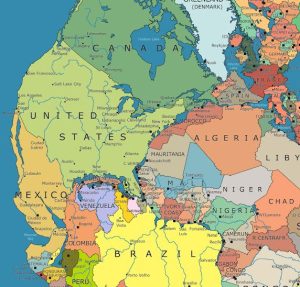
Over 200 million years ago, there was a land known as Central Pangea, a land of towering mountains rivaling the Alps and the Himalayas.

Remnants, such as the Appalachians in North America, the Scottish Highlands, and the Atlas Mountains still exist, and since 1994, proponents have argued for the concept of an International Appalachian Trail (or Sentier International des Appalaches) that seeks to “reunit[e] what oceans are dividing.”

img_9620
The International Appalachian Trail  runs through the highlighted areas

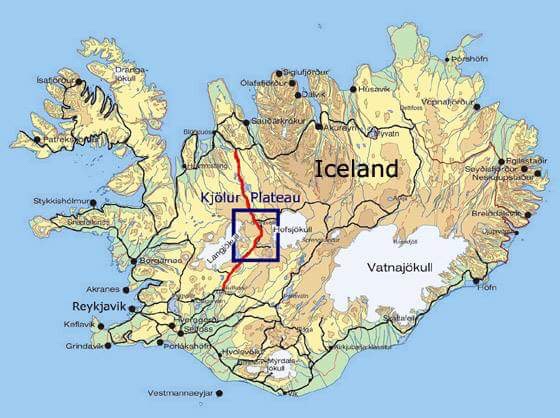
In fact, on the IAT’s website, one reads that, “At the 2012 IAT Annual General Meeting in Reykjavik, Iceland, the Iceland Touring Association’s Kjalvegur hinn forni (Old Kjalvegur hiking trail) became an official part of the International Appalachian Trail.”

As a native Appalachian and someone attempting to hike the “entire” Appalachian Trail from Georgia to Maine, I am perplexed. How is it that this internationally recognized trail is being expanded to include Iceland, a 20 million year old volcanic island along the Mid-Atlantic Ridge? And what does a name, or the identity of a place mean to the people who are from there, or to the people who come as tourists? How far back in time do we go to understand our global citizenry?

img_9621
Old Kjalvegur named an official part of the International Appalachian Trail

When I visited Iceland in the summer of 2017, I fell in love with the people, the culture, the horses, but especially the landscape. Being just one of the 2 million tourists projected to visit Iceland in 2017, I was immediately drawn to questions about belonging, both in terms of who belonged in Iceland and to what extent a place belongs to the people who have an interest in being there.

IMG_4385
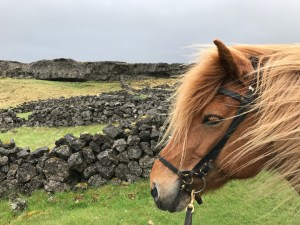
Solveig, the Icelandic horse I rode for five hours near the volcano of Hekla

As a resident of a land where 3 million people from all over the world come annually to hike a trail running through the American region known as Appalachia, I am mystified by the suggestion that we could extend the name of this complex, misunderstood, and historically impoverished region to trails in Iceland and Europe.

My project brings together two geographically isolated regions, Appalachia and the Icelandic Highlands, by exploring the way place and identity are shaped by geologic time and personal experience, while also asking critical questions about tourism’s effect on local economies and fragile landscapes.

I use the word “fielding” to describe my process of exploration; a field is an area of knowledge but it is also a physical space that can be passed through. A field can be inhabited or grazed; it can also be fenced in, commanded, or closed off. A field is a place where boundaries are formed and also trespassed.

As a hiker, I pass through many fields, and so too as an essayist. Most importantly, a field is open to those inside, and though it may be symbolically or literally an enclosure, its edges are sometimes defined only by line of sight or some subtler vision.

My fieldings have usually happened on the page, excepting those times I have been a tourist in the States and abroad. The land of Central Pangea is invisible without both kinds of fielding;  we can only see it if we allow geology to draw the lines of our earth’s histories. We recognize that politics and time draw different lines to describe the lives of human beings. Massimo Pietrobon’s world map of Pangea becomes a field into which we enter, now aware of how close we are to people who seemed so far away three minutes ago.

My intent is to see Central Pangea from as many fields as possible. After exploring the culture of thru-hiking on the Appalachian Trail,  I intend to travel to Iceland to hike Kjalvegur hinn forni (Old Kjalvegur), then Laugavegur, and ride horses through the wilderness of the highlands during the summer of 2020. From there, an imagined center point, perhaps I will one day explore the rest of these mountains on both sides of the Atlantic.

My project is important because both the Appalachian Mountains and the Icelandic Highlands are vulnerable and also valuable; these are qualities that invite unintentional exploitation by the very people who come from all over the world to enjoy them. I believe that promoting awareness begins with immediate observation and study, in-depth and first hand.

At home in the United States, I am a backpacker and abide by the principles of Leave No Trace, which means that visitors to any natural place must work to protect the land by packing everything out, minimizing damage due to traffic, and being respectful of the residents, both human and nonhuman. Unfortunately not all visitors follow this ethic, and like many other people, I wonder about the hidden cost of Iceland’s tourism explosion, and how it fits into the larger framework of globalization.

Professionally, I am a writer and professor of creative or literary nonfiction. I traveled to Iceland in 2017 as a panelist at the NonfictioNow conference, hosted by the University of Iceland in Reykjavik. I spent two weeks in Iceland, and explored a little outside of the city, riding horses and getting to know more about the land and the people who live there. I was particularly curious about the surge of tourism generated by the “Inspired by Iceland” public relations campaign nearly a decade ago.

As a native of Appalachia, I feel qualified and compelled to consider my own questions about place and identity created by the imagining of the so-called “International” Appalachian Trail which includes areas of Iceland, Scotland, and mainland Europe. I have taught Appalachian literature and presented at a conference for Appalachian Studies. I feel that I have a solid grasp of what Appalachia is in contrast to the rest of America, an understanding of the region’s etymological origin, and I can say without hesitation that the concept of using the word “Appalachian” to describe a trail on the other side of the ocean seems like appropriation, though derived from the nomenclature of mountain building (orogenies) in geology. From what fields do we speak when we name a place?

In the same way that Icelanders marvel at the ridiculous assumptions that tourists make about Iceland, people in my part of the country shake their heads over what people believe about Appalachia. Some of it is true—there is much poverty and ignorance that comes with geographic isolation. But, as is true in Iceland, the strength and resilience of a people who have lived in an isolated place for generations is often obscured by myth. Do cousins marry cousins in Appalachia and do we wear shoes? Are there still outhouses and do people live in cabins? One may as well ask if there is an app to prevent Icelanders from marrying relatives, and whether everyone there believes in elves.

Iceland, at 39,682 mi², is slightly larger in area than the Blue Ridge Mountains, the part of Appalachia I call home, estimated to be 34,563 mi². The two National Parks in the Blue Ridge area are Shenandoah and the Great Smoky Mountains, which combined drew over 12.5 million visitors in 2016. As with Iceland’s Ring Road and Golden Circle, visitors from all over the world primarily see the landscape of these parks by car, either via Skyline Drive or the Blue Ridge Parkway. This comparison is useful for my project because how a landscape is experienced affects how the environment is preserved. Given the number of tourists now coming to Iceland, the people there are having to find new ways to manage resources that natives and non-natives share. Although tourism is a boon to places that offer natural wonders, what is the final cost for the people who make their homes there?

Tonally, my hopes are that I can approach serious concerns with a light-hearted curiosity and a willingness to inhabit this fantasized middangeard, a hypothesized field of geologic time and orogenies without falling into parody. I think it is fruitful whenever we find ways to connect to cultures distinct from our own, and laugh at the folly of naming, of owning, of possessing something as old as our Earth, a place that has been divided, folded, lifted, and imagined in ways surpassing human experience.