Fielding 009: Why I Created Monolith 1.3 for Distraction-Free Writing

I’ve been concerned about the future of writing instruction ever since Large Language Models (LLMs), usually referred to as Generative AI, hit the public scene in 2023. It wasn’t just the original written works that AI was trained on, but visual art too. The cost to the environment, our clean water supply, the drain on the power grid from the data centers . . . it was all too much. So GenAI became my nemesis at times, even as I intermittently began to find ways to make it useful for my work.

As a teacher of writing, I spent too much time at first trying to police my students’ research papers for academic misconduct.

tl;dr . . . That approach only made everything worse.

That’s why I created Monolith, and–as ironic as this might sound–with the vital assistance of Gemini, Google’s flagship LLM.

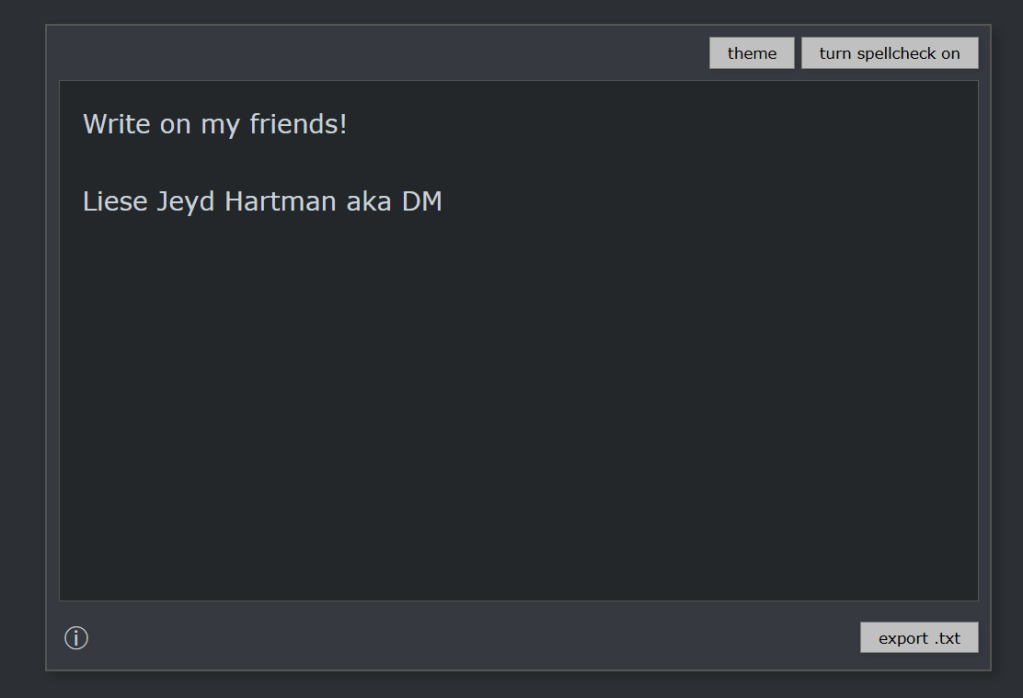
In Monolith, which is intended as a distraction-free writing tool, you can turn the spell check on or off, change the theme (color scheme), and if you hover your cursor over the information button, you’ll see the word count and time for your writing. You cannot copy-paste into or from Monolith, but you can export what you write into a .txt file like Notepad. You can see the default interface below:
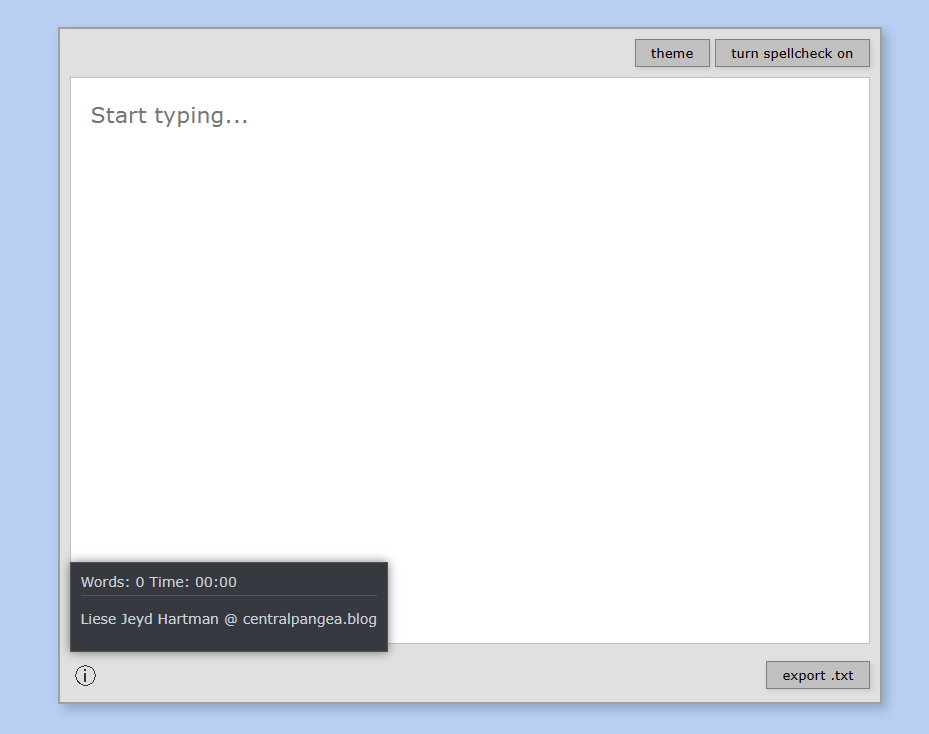
If you are interested in the really long version of why I created this writing tool, read on . . .

From 2023 through the beginning of 2025, the harder I tried to fight LLMs and students’ use of them, the more pessimistic and irritable I became. I was especially upset when their creative writing would be flagged as AI-generated.

At first, I took it personally. Then I began to notice that students I trusted, students who loved writing, were being flagged. Maybe it was because they wrote too casually using a general, vanilla vocabulary, or used Grammarly to edit their work. Or maybe I was naive about how integrated AI had become with all of the writing we produce every day.

In the Spring of 2025, I realized that false positives, as well as papers that slipped through AI-detection software, were forcing me to reevaluate my approach to writing instruction.

Over the summer of 2025, I learned that my fully online and asynchronous college writing course was filling with students. The despair set in. What was I going to do?

After watching many teaching/learning videos supported by major textbook publishers and reading a number of articles, I decided I would focus on ethical and transparent use of AI in my college writing classes, and ensure that students were aware of the different levels of AI use. This was after I watched Notre Dame’s teaching and learning videos and from there, dove into an article titled “The Artificial Intelligence Assessment Scale (AIAS): A Framework for Ethical Integration of Generative AI in Educational Assessment” by Mike Perkins, Leon Furze, and Jasper Roe, et. al. published in The Journal of University Teaching & Learning Practice 21:6 (2024). [read it here]

In that article, the writers make a bold claim that:

There is now evidence from empirical research that major academic publishers of scholarly journals do not prohibit the use of GenAI; conversely, many encourage their use to refine and improve manuscripts if their use is declared transparently and if the author takes full responsibility for the accuracy and veracity of the work (Perkins & Roe, 2024). Pragmatically, this seems to be the only option that prepares academics and students for the rapid advances in AI; given that text detection services and combative approaches are flawed (Sadasivan et al., 2023), and a ‘postplagiarism’ world may be on the horizon (Eaton, 2023).

So, I’m not really ready for the “postplagiarism” world just yet, but I was intrigued by the scale of AI-assistance that they present and discuss in this article. Their chart is offered below in Table 1, and explained fully in their article linked above.
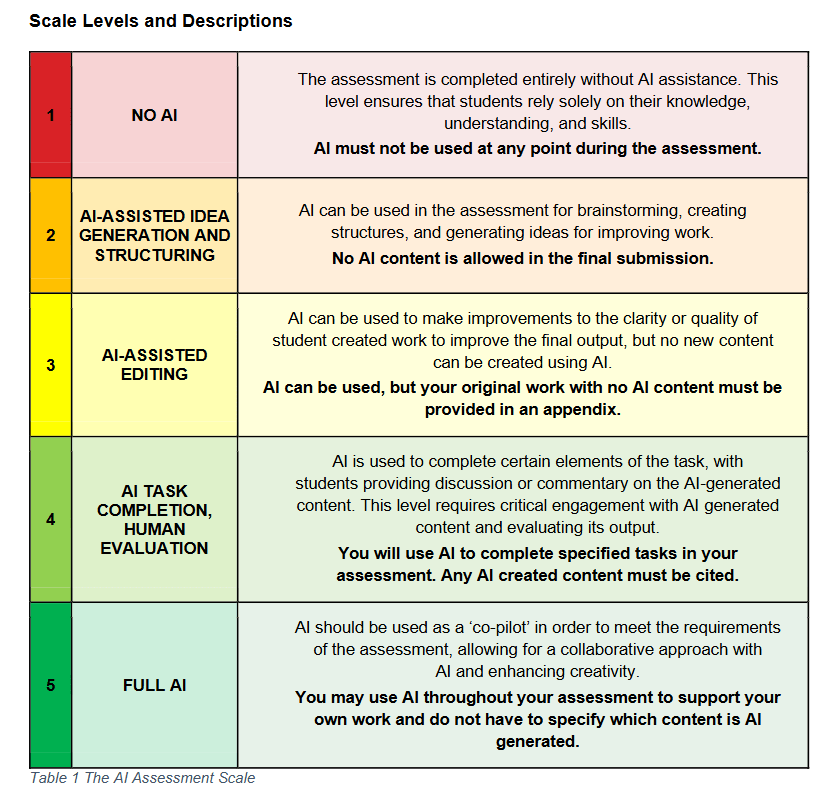
Table 1 from the article linked above shows the levels of use that a student might employ with regard to GenAI. The levels are shown from 1, which is no AI, to 5, which is full use without specifying what was created by human or machine in each and every instance of use.

Deciding to focus on AI-transparency in my teaching created a new problem, however. What method would I use for ensuring that a student did their own writing initially?

Why, handwriting, of course!

Except, students with dysgraphia and students with serious arm injuries were suddenly at a disadvantage. These are the things that professors learn after they have made a handwritten notebook the cornerstone of their Level 1 (no AI assistance) coursework.

At first, I went back to explore all of the typewriter simulators online. I allowed students to use Freewrite’s Sprinter application, which is a free tool used to market their writing devices. In classrooms, however, the app would regularly glitch, and sometimes students had trouble creating a free account to save their work. As stylish and minimal as Sprinter was, it still wasn’t ideal, and I had specific ideas about what I wanted from my writing tool that would be different from everyone else’s.

At the same time I was deciding to focus on ethical and transparent use of AI in my first-year writing classes, my university followed the pattern of many others in fall 2025. With Ohio State University embracing “AI Fluency,” the new standard was helping students learn better prompting and integration of AI tools into their coursework. My university established a governance policy for our use of AI at work, including the specifically authorized tool “Gemini,” which I had never used before.

As I became more familiar with Gemini, the tool responded beautifully. I was finding new ways to use it so that I could model it for my students when we came to the assignments requiring more deliberate use of GenAI. But I kept coming back to the central problem: how would my students produce that first, free-written draft before polishing it in Gemini?

It was a short step to asking the LLM itself for help. I was trying to figure out what a “GEM” was, and in my curiosity decided I would give it a shot. Could I create a tool that would serve the purpose I needed it to? My first prompt went something like this:

You are a college professor wanting to create a writing application that will be basic, like a text file editor, but does not allow copy paste and does not check spelling or offer predictive text. You would like the tool to be accessed with a link and allow someone to write, have their words counted, and be able to export the file to a .txt file to save on their hard drive. You would like the background to resemble a word processing application from the early 1990s, which is basic and no frills. Typewriter nostalgia and retro styling would make this an awesome app for use in a college classroom for students to take notes in and export their work.

Several hours later, I had viable code. Having worked a little bit with basic .html coding in the early 2000s using Adobe PageMill 3.0, a WYSIWYG program for noobs, I still had to ask dumb questions of Gemini, like: “What is a CSS file?” and “What is Java Script?” Remarkably, the answers that Gemini offered were truly clear and helpful.

Soon I was testing the prototype in a “Code Playground” and looking for ways to host it. By the time I was getting close to what I wanted, I had figured out how to customize the code for colors and button labels, and what each part of the code was used for.

I told a friend about it, also a creative writing professor, and she was thrilled. “You should charge.” I wasn’t confident that what I had created with Gemini’s help had a value, or that I could even charge for something co-written with an LLM. So I said, “maybe I’ll offer a donate button.”

Still working on that . . .

Anyway, that is the story behind “Monolith,” which Gemini suggested the name for. Later I realized that a “monolithic application” is essentially what the writing tool is. Software created for one purpose, and limited in its functionality and scope.

As I said before, in Monolith, you can turn the spell check on or off, change the theme (color scheme), and if you hover your cursor over the information button, you’ll see the word count and time for your writing. You cannot copy-paste into or from Monolith, or drag-and-drop text, but you can export what you write into a .txt file like Notepad.

I welcome feedback from teachers and students about how I can improve Monolith, but for now, please enjoy. There may come a time when I have to pay for the hosting, but for now, I’m happy to offer this as a free beta tool in the search for distraction-free writing experiences.

It may also be a safety for students who are anxious about being accused of using an AI when they didn’t mean to. Perhaps an acceptable accommodation for students who are asked to take essay exams but cannot handwrite them. However you find it useful, please let me know in the comment box at the end of this post.

Fielding 008: Beyond These Winters

Six years have come and gone since my last “fielding,” and there have been days when I’ve nearly given up.

Backpacking.

Planning for a day when I could return to dreaming.

All of my projects. Everything.

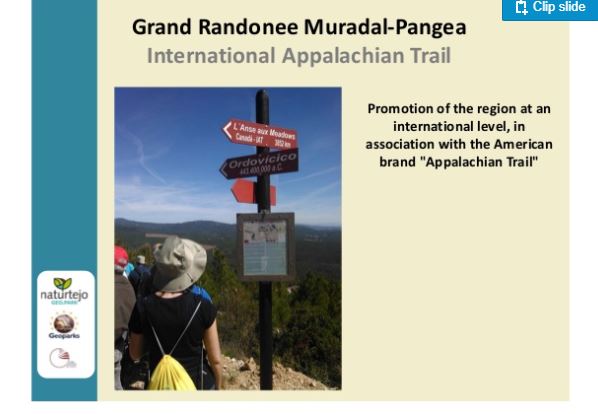
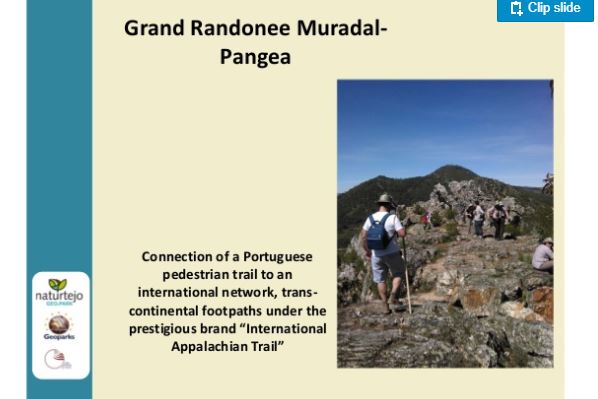
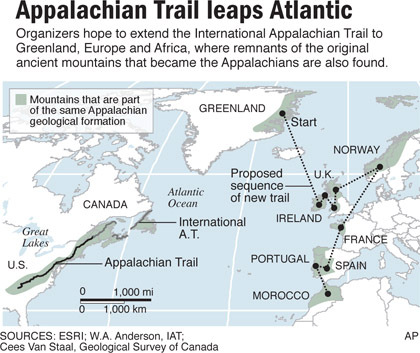
Life changed in ways that crushed whatever plans I’d been making to hike the Appalachian Trail (AT). There would be no grand hike overseas. I had wanted to hike parts of the International Appalachian Trail (IAT), which I was just beginning to learn about. I had corresponded with the co-chair of the IAT about hiking in Newfoundland, but that was before everything changed.

My dad’s death was the first of many passings–shocking because we didn’t know he had cancer until he had a month to live. The larger world mourned the loss of people and plans that we once took for granted as doors closed, funding stopped, and people stayed home.

Every day since then I’ve wondered: will I ever get back to where I was?

Even after the pandemic lifted and I resumed day-hiking on the AT, so much was gone.  My job consumed me, my health eroded, and family matters took more of my time.

Years passed, and I took another job. I left East Tennessee and the mountains I still consider my home, and relocated to northwestern Ohio.

The landscape here is flat; far more than the hills of southeastern Ohio where I’d once lived as a grad student. It’s cold in the Midwest. It’s also hot, depending on the season. We have droughts and ice storms and tornado sirens that blast the first Friday of every month at noon. The university is small, but once more, my job takes over, and I teach writing, or call and visit family when I can.
More years pass.

Hiking? Not in a while. Backpacking? Deeper in my past than ever before. I think of deleting this site, but continue to renew every year. Perhaps there’s another project? One that’s greater than the failure I feel now?

Last year I embarked on an exciting adventure. I wrote and produced a novel as a part of an experiment. I wanted to teach my students about this particular area of writing and publishing that I had no experience with. In the process, I found a way to engage with the Appalachian Trail again, and to think of the Earth in a new way. One that would lead me forward into something hopeful from the very dark place that I’d burrowed into.
Perhaps I had been hiding from the fears we face every day: Climate change. War. Natural disasters. Unstable governments and division. Political strife.

But there was a writing contest that drew me in, by encouraging entrants to imagine a better future, even in the midst of climate change. The Imagine 2200 climate fiction contest inspired me to believe in a world that comes after us, that will belong to our descendants, and their children, and the children that come after them. I went back to an old idea I’d had for a novel set over a hundred years into the future. Each year I submitted something to the Imagine 2200 contest, and though I did not win, I kept writing and submitting new stories.

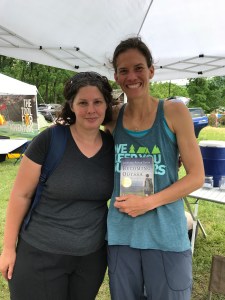
The short stories I wrote became chapters, and in February 2024 I published the sci-fi novel Beyond These Winters under the pseudonym “Liese Jeyd Hartman.” (The ISBN is 979-8218371999 and it is available through your local bookstore as well as Amazon.)

A cybernetic fox and a delivery boy undertake a journey north

It was out of love for the Earth and in the spirit of creating hope for myself (and others) that I undertook this writing, and now the characters are as real to me as any companion I hiked with on the Trail. In my novel, the landscape of 2149 is altered, but there’s still a continuous walking path stretching north from Georgia to Maine, and beyond, into Canada. In my novel, the Appalachian Trail has become “The Narrow Road.”

The world of my novel is no less connected, despite the collapse of infrastructure and disasters in North America. There is hardship, and to an outside observer, the “American States” in 2149 may be a dystopia. There are no cell phones, no convenience for those displaced or outside the wealth that has moved steadily north. People have migrated away from the coasts, and the economy has moved toward the Arctic sea lanes which are no longer choked by ice. 

And yet?

Humankind persists. People still fall in love. They go on long journeys, and are sometimes motivated by kindness. Whether the story’s setting is a dystopia or a utopia, that may be up to the reader. Much like the lives each of us are living right now, power, wealth, and technology are available to a few, but not all. But by this time, people have learned to manage the threat of human destructiveness through gene editing and nanotechnology.

Utopia? Not after a hundred years of climate change. Dystopia? Depends on where you live, how you live, and how far you or the generation before you has traveled to find a safe haven. 

Some things never change.

This is not my last fielding, and not my first, but nonetheless, a new beginning. I’ll keep writing, and the hope is to return to hiking in the coming years and to finish the AT. There’s a little patch of land back home, deep in the forest, and though steep, The Narrow Road runs like the edge of a knife on the ridge above. Landslides gouged the creek in my Momaw’s yard and reshaped the land there in 2021. But the land continues to evolve and so do we all.

Just last year, in late September, a “thousand-year flood” worked its destruction all around that same forest I call home. Hurricanes ravaged Florida, while other parts of the country saw unprecedented rain. It severed hollows from the main road, filled the Nolichucky River to thirty feet above flood stage, took out bridges, homes, people, roads . . . all the rivers of my childhood were pouring through the mountains of Virginia, Northeast Tennessee, and Western North Carolina. I wept to read about cadaver dogs combing the rocks lining these rivers in my home.

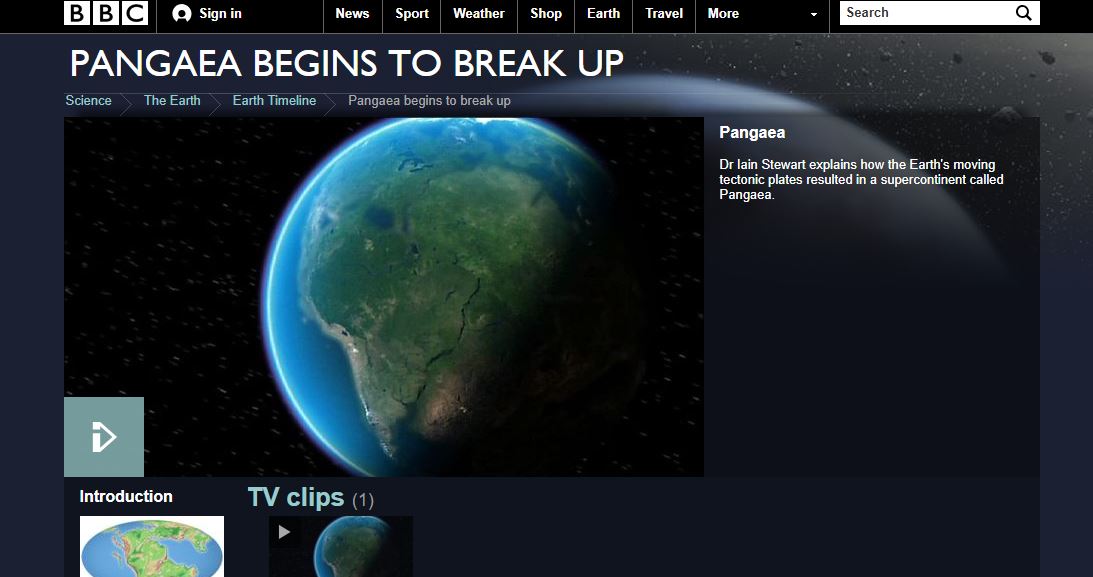
Climate change is all around us, and as I think back to that dream of a hiking project I had in 2019, I realize that the journey is ongoing to understand this Earth and the time that has shaped it. If you need a visual, refer to Ian Webster’s stunning “Ancient Earth” dynamic map. I see where I am now, and it is not too far from my former home in Tennessee when viewed from this distance, 240 million years later.

We are no less connected now than we were before everything changed, and I suspect a hundred years will pass in the same way each century tends to do: painfully, punctuated by wars and disease, fires, flooding, and weather made worse every second, even if we choose to ignore it. How did people live through the twentieth century? 

How will we live, in the future?

How does anyone now?

Signing out from the plains north of the Central Pangean Mountains, this thirteenth day of February in 2025

Just a concept 25 years ago . . .

Read about the 25 year history of the International Appalachian Trail.

A relatively new theory in geology discovered in the 1970s proved that parts of the ancient Appalachian Mountain range that existed 250 million years ago broke apart when the North Atlantic Ocean began to open up – and parts of the original range on the “super continent” scattered throughout Europe, Scandinavia and parts of Africa. It was the idea at the heart of the International Appalachian Trail.

Fielding 007: Max Patch

My first backpacking trip began at Max Patch in June 2015. Amy, Linda, and Harper Lee were game for a trip that was the first of many more to come.

What set that trip apart from all of the others (aside from being my first) is that we began during a thunderstorm, which was terribly dangerous on a mountain with no trees. We all knew that we needed to get off of the bald as quickly as possible.

10339493_10152868741636423_1947796427666773401_o
From left across to front: Amy, me, Linda, and Harper Lee

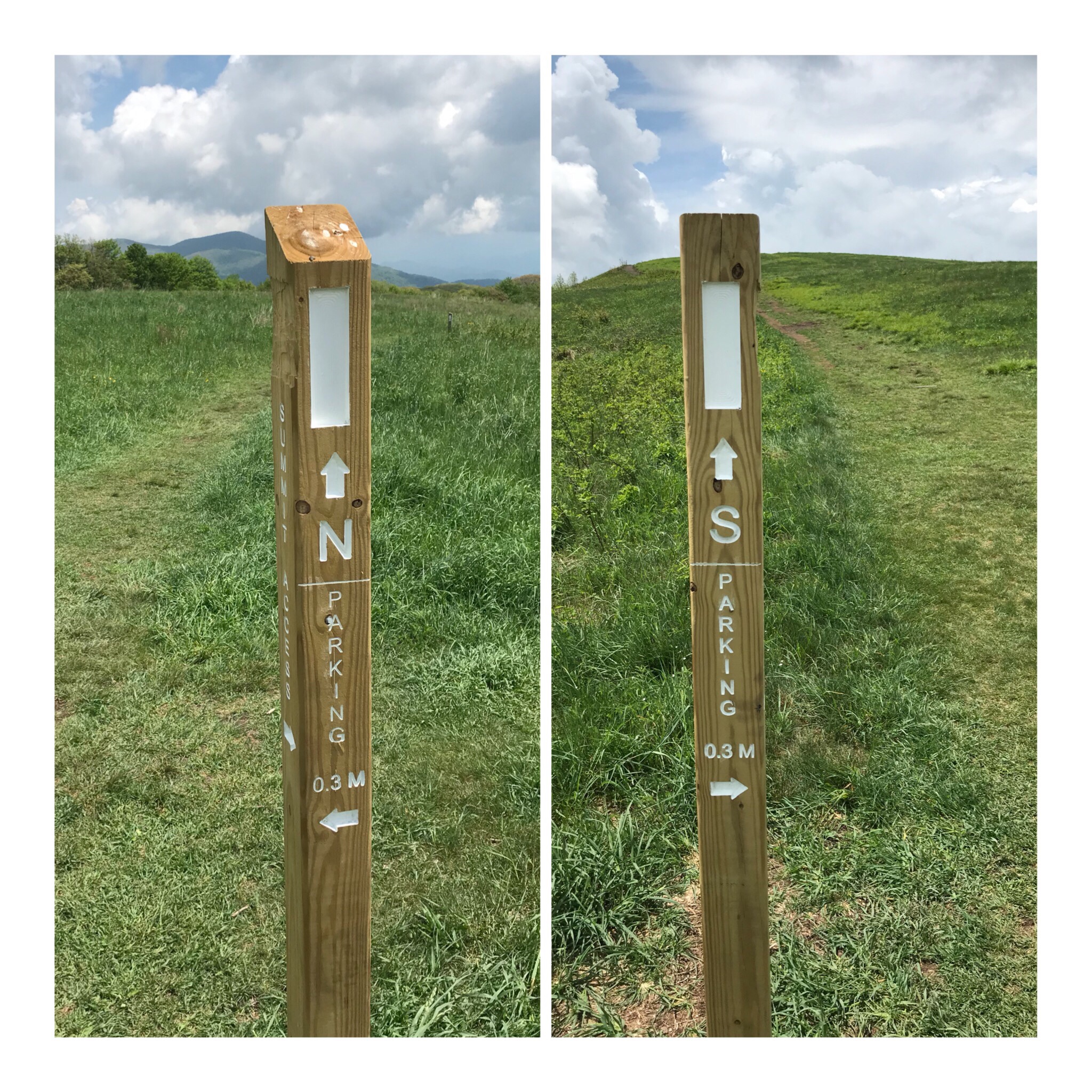
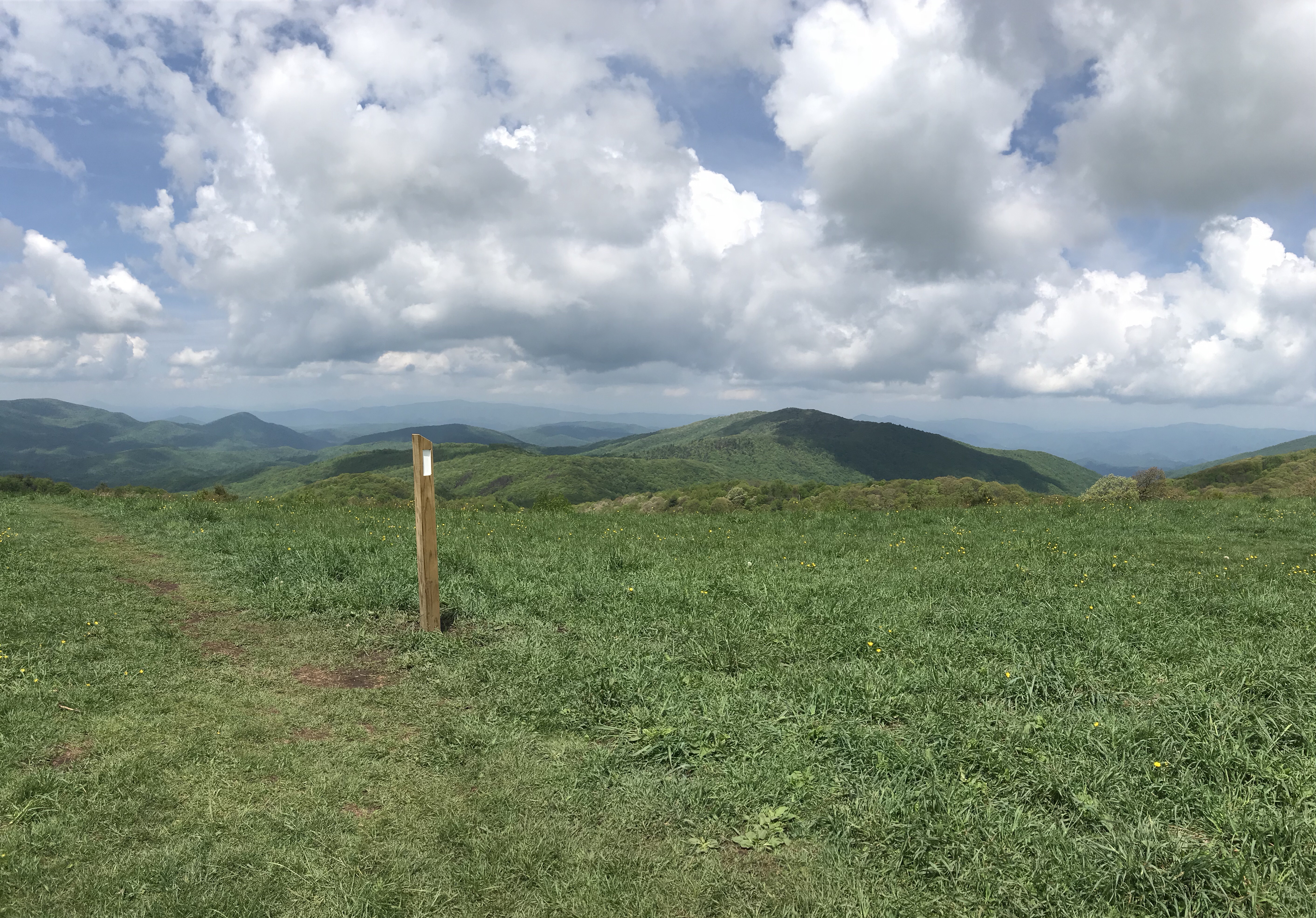
What we didn’t know was that the only sign for the AT was a four-by-four post with incorrectly labeled north and south arrows. Someone had used a sharpie marker to indicate north to the right and south to the left. Because we were in a hurry to get off the bald mountain (no trees! lightning!) we rushed in the direction we assumed to be north, toward Hot Springs.

It would be the next day, after we had already hiked six miles south, that we would realize our mistake. Without cell service, and knowing that we would not reach Hot Springs on schedule, we relied on the kindness of strangers to relay a message to our ride asking to be picked up in the very place we had been dropped off two days before.

IMG_0966

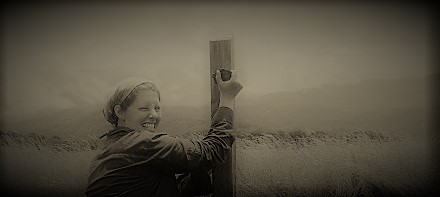
That afternoon, while waiting to be picked up, we scowled at the mislabeled post and scratched the correct directions with a tiny pencil. It was a pathetic but satisfying way of showing our frustration.

IMG_0967

Imagine my surprise when I returned this May after dropping off Low Gear at Lemon Gap to see a new post, correctly and beautifully emblazoned with the north and south direction markers. It made me smile to remember the chaos of three years prior.

Still, this was a melancholy visit to Max Patch for a variety of reasons, at the same time I enjoyed the best part of an advancing afternoon. I had just sent Low Gear on her way, and she was happy to be rejoining the culture of the northbound thru-hikers making their hopeful way to Katahdin. I wished I was with them, but I knew I had other things I had to accomplish before fulfilling that dream.

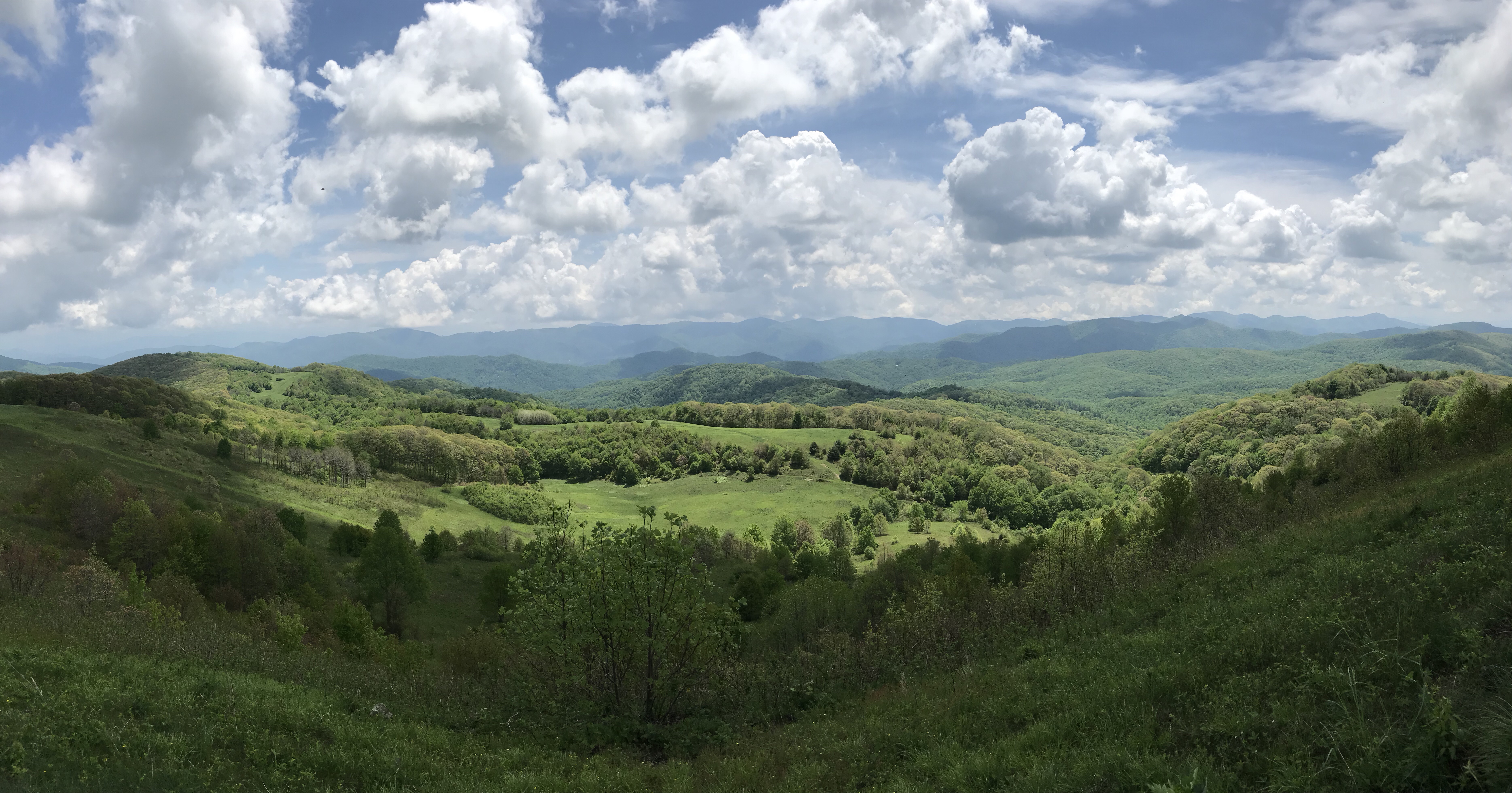
The better part of the day was spent on a blanket enjoying the clouds. I watched the hikers go by, envious of their hard-won miles. When I felt a few drops of rain, I packed up and made my way back down the mountain.

img_0481

I recorded the songs of the eastern towhee, a vireo, and a turkey. I made my peace with leaving the mountain and remembered the hikes of three years before: the first, when we went the wrong direction, and then the one we completed later that year on my birthday, when we triumphantly arrived in Hot Springs on schedule. (That morning of my birthday was one of the most beautiful I ever recall on the trail.)

Walnut Shelter Sept (1)
Linda and Amy wait for me at Walnut Mountain Shelter, September 2015

Anyone who backpacks has a special mountain, I wager. Perhaps not the favorite, perhaps not the most difficult, but meaningful, nonetheless. Max Patch will stay in my memory as a reminder to always check which direction I’m headed before traveling too far, too fast.

Fielding 006: Trail Days

Over the past few weeks, I’ve been looking for ways to be helpful to others, which is a new experience for me. At first I joked that it was a way of improving my karma, since I’m trying to buy a house. But karma doesn’t work that way.

As Krishna says to Arjuna in Chapter Three of the Bhagavad-Gita, “Strive constantly to serve the welfare of the world; by devotion to selfless work one attains the supreme goal of life. Do your work with the welfare of others always in mind.”

143c7775de1113d2f6a8dc188464f208-1
Arjuna receiving instruction from Krishna on the battlefield

While helping a friend move mid-May we drove an hour back and forth through the countryside and I passed a sign bearing a verse that I’d never encountered, though raised Baptist. It too echoed what I was thinking about in the Gita, but came from Paul’s Epistle to the Galations: “Be not weary in well doing.”

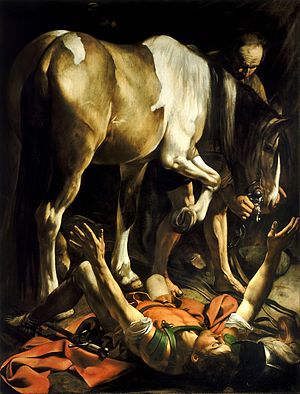
300px-Conversion_on_the_Way_to_Damascus-Caravaggio_(c.1600-1)
Conversion on the Way to Damascus (Conversione di San Paolo), Caravaggio, 1601

I cannot claim to have ever done work so selflessly, or without complaint. In fact, my desire to hike the trail had a corollary selfish motivation; I wanted to run away from the anonymous “other people” I encounter every day. I wanted to escape our current political climate. Perhaps I also wanted to shirk the tasks of maintaining a household. However, living in someone else’s house combined with parenting a near-adult led me to consider what the true path of this summer might be.

Trying to make a new home come together compelled me to find ways to spend my newly opened schedule. I wanted my new days to be meaningful; perhaps they could even be as worthwhile as hiking the Appalachian Trail had been. And so we come to the reason for this post: sorting out what selfless work is and what it means to be engaged in well doing.

Davenport Gap
With Low Gear

A trail friend I’d met in Georgia needed transportation from Gatlinburg to Davenport Gap, so I drove down to help her and two other hikers get back to the trail. A friend of several years was moving, so I helped drive and carry boxes for three days. It felt good to be useful, and her gratitude made my heart soften in unexpected ways.

IMG_0402
With Ron Rico, Eric, and On Star

Later that same week, several hiking friends needed rides to Trail Days in Damascus, and many of them had made it as far as Erwin, Tennessee. Erwin is a fifteen-minute jaunt for me by car, and Damascus is an hour ride up the road. But I had promised them I’d help once they made it past Max Patch.

IMG_0410
With Low Gear, Snorkle, and Little Bit

I know most of the roads and gaps between Max Patch and Damascus, and I often call this my home area. I am grateful to have backpacked nearly all of the miles in this section and was thrilled that folks I met in Georgia were getting ready to pass through for the first time.

IMG_0427

IMG_0456

Trail Days is quite possibly the biggest event involving the Appalachian Trail (AT) that happens close to where I live. I usually try to make it up for the parade, and this year was no exception, especially since I was taking Low Gear, On Star, and Eric back to Erwin afterward. (Click here for a brief clip as the class of 2018 walks by.)

InkedIMG_0442_LI

IMG_0449

IMG_0430

IMG_0432

IMG_0431

Every year Damascus hosts a gargantuan celebration of the Trail with vendors, hiking celebrities, and services catering to thru-hikers, but exciting for anyone in love with the AT.

IMG_0436
With Jennifer Pharr Davis, aka “Odyssa,” who hiked the entire trail in 46 days in 2011, holding the record for fastest thru-hike till 2015

Tent City, where the hikers make their home during Trail Days, is home to a variety of tribes, such as the Trash People and Riff Raff, the oldest and rowdiest. After speaking with a couple of trail friends, I’m still a bit in the dark about how the groups stack up with each other, but then, I think these are intricacies of the thru-hiking experience that you only gain if you stay with the hiker trash bubble as it makes its way north to Katahdin.

IMG_0457
With Ron Rico, who had been hiking with the Trash People

My first introduction to any AT tribe came at Plumorchard Shelter in Georgia on the coldest night of my April hike when I met “Tune-Up.” A spokesperson and leader for the Trash People, Tune-Up explained that the Trash People regularly pack out trash to preserve the trail and generally try to keep a good vibe going. He hung prayer flags inside the shelter, commenting that the Appalachian Trail Conservancy (ATC) frowns on the practice.

1F5889EC-F58A-4CB3-AAE0-BD63A053B8DF

That evening I learned that the ATC is not universally revered by the thru-hiking community, and it opened a number of questions for me that I’ll be working out for years to come.

Around the fire, he spoke in glowing tones about Miss Janet of Erwin, whom most thru-hikers know either directly or indirectly to be a saint of the trail, the Trail Angel of all trail angels. The closest I came to her was picking up Ron Rico from her house on the way to Damascus, and from the car I saw hikers mulling about on her carport, several in fact I remembered from weeks before at Plumorchard, Tune-Up among them.

Over the days I shuttled hikers to Damascus (and those preceding) I experienced frequent realizations that I was not on the trail anymore, that I was no longer hiker trash (smelled too good for that!) and that I could no longer lay claim to belonging in a community that had moved on from Franklin, NC after I had left it.

It was humbling, but also ratcheted up my respect for thru-hikers, and helped me sort out how my next hike would play out, if I could be fortunate enough to hit the Trail again in years to come. (Section hiking is as good as it gets for now, but I’m hankering for the whole enchilada once my kid takes flight into college.)

It’s hard to explain what the appeal is to people who know nothing about the Trail, have never experienced the thrill of knowing that everything you need to make it for a few days is in a backpack that you carry everywhere you go. The peace that I find when I’m in the deep woods is incomparable. When I’m there I trust that the Trail will provide all that I need, and only when it is time.

Off the trail, I am reminded that every day we are given opportunities to help others realize their dreams, to serve a force beyond ourselves, which inevitably sustains all beings. Still trying to work out what selfless means in this context, when it feels so good to be helpful and when my own life is made better as a result.

IMG_0433

Fielding 005: Redirection

This was the post I dreaded from Day 1, and knew I would need the courage to write: the plan not executed, the plan so perfectly laid.

After everything, the moment when every piece of gear in my pack is necessary, when every fault has been found and repaired or replaced. The food has been separated into plastic bags and mail drops are ready to go to the post office; reservations have been made and weeks of hiking plotted.

Family and friends have been notified that this NOBO (northbound hiker) is now a SOBO, once she makes it to Harper’s Ferry, the symbolic near-halfway point of the Appalachian Trail. I had even decided on where to eat breakfast while waiting on the Appalachian Trail Museum to open on Tuesday morning.

The hike south through Virginia that was not to be.

I cried myself to sleep for three days once I knew my path was diverging from the Trail. The morning after those three days I was calm, as if I had accepted the death of a loved one. I decided it was like a death, those nights when I lay quietly trying to conceal my weeping. What was I crying for? Who was I mourning if not that other “me,” the one without responsibilities, with no schedule except the one that indicated maildrops and shelters?

The truth is, I woke up after those three days with a deeper sense of my real direction, moving forward. I had been naively imagining certain parts of my life to be separate and distinct from one another. I had compartmentalized my “trail life” from my “home life.” My kid said I was using my frequent road rage as a way to justify going back on the trail, or vice versa. I was going to sleep at 7:30pm, like I did when I was in a tent. There was a wildness about everything I did, and I was obsessed with the weights of things.

Frequently I packed and unpacked my pack, eager to be heading out again.

I wasn’t coping with being back home, partly because we weren’t really at home, but staying with my kid’s father. Three cats and three adult-sized persons were inhabiting a small home and it was hard to move around since our stuff lined the walls, filled the garage, or was stacked in boxes around the bed.

I shared that bed with my child, not really a child, and the cats piled in too. My pack was beside the bed, and every night I pored over my hiking calendar, deciding how often I could stop, wanting to clear most of Virginia in 40 days. And I would have done it . . . I know I would have.

But practically, I began to also look at our housing options when I came back. Though I planned to move us closer to the college where I taught (and where my fifteen-year-old was also completing their first semester) it was clear that pickings were slim. The reality sunk in, that we had to buy a home, given that we had two cats and very little money for pet deposits and $700 monthly rents. A mortgage would be half that, provided we could find the right house.

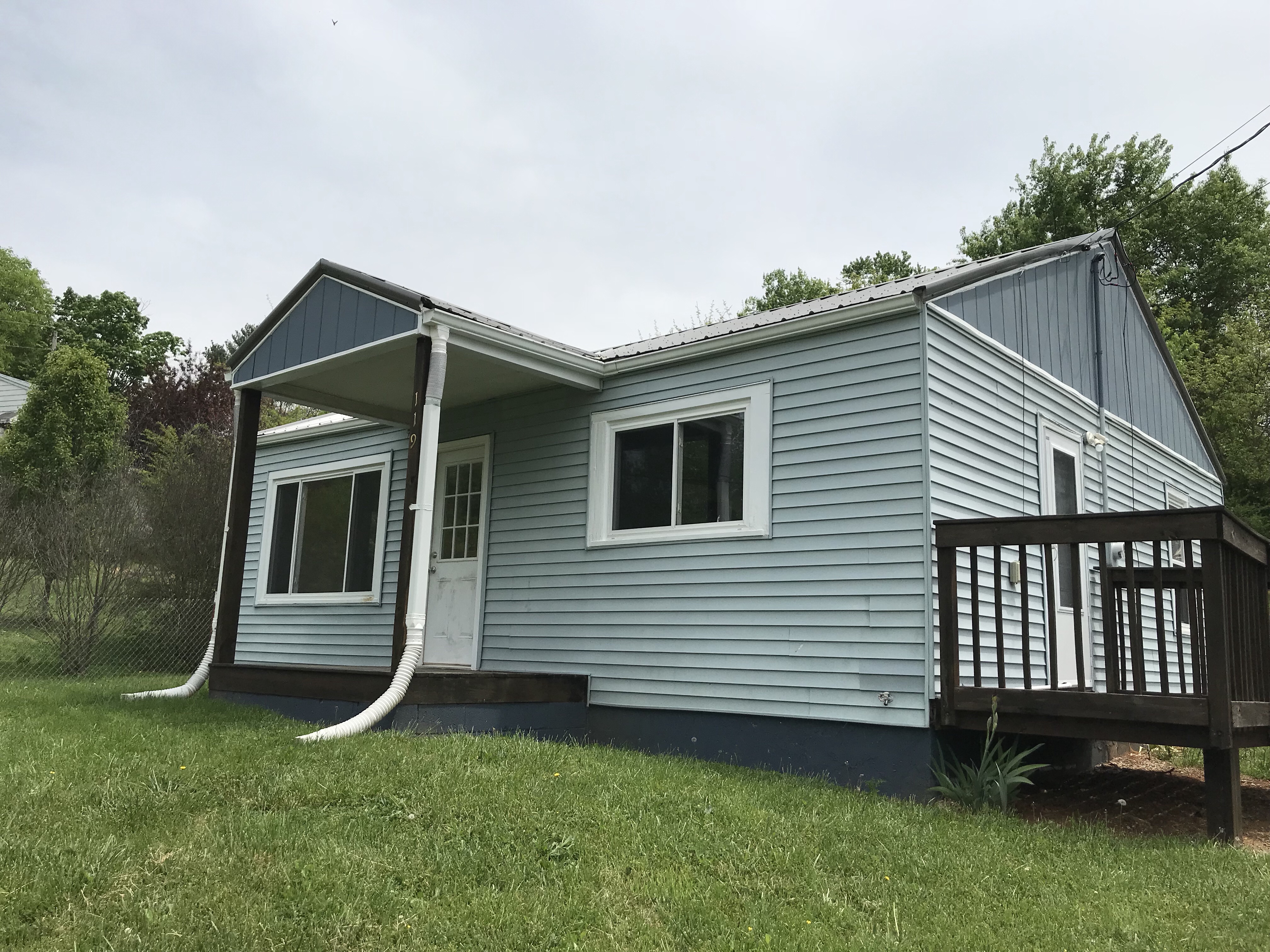
Fortunately, a good friend of mine had been working on the perfect house, a petite cottage close to the college and just the right size. Its modest stature and sunny windows appealed to me, and so I began the difficult process of trying to buy a home.

New roof, new gutters, new plumbing, new electric . . . my favorite color.

A level yard, retired neighbors, newish windows, new heating/cooling, hardwood floors.

As the first day of realization turned into the second day, I knew that this was the right thing to do, and that my kid came first.

It was hard living with other people. It had been hard renting for a year while trying to sell my house that we had lived in for almost ten years. Here I was, preparing to commit once again to a house and mortgage, but for all of the best reasons.

It was time for me to accept that the trail would wait, but that my kid would not be fifteen forever. Their success in college was partly dependent on my finding us a reliable, affordable home where we could stay until finished they school, and there was no reason to commute more than the ten minutes this little blue house was away from our school.

This morning I pulled all of my maildrop bags out the boxes so that we could organize the Epic and Clif bars by expiration date. My kid agreed to go on a backpacking trip with me–the first ever–and there will be many day hikes. We will have plenty of snacks.

I have texted all of my hiking friends to let them know I will be home when they pass through the area, and I can shuttle them to town or take them to Trail Days.

These meat and cereal bars were going to be my lunches while I hiked through Virginia.

I have told my Dean that I am around this summer so my work as a new Chair can begin in July, on schedule.

My kid and I are going to the beach with my aunt and uncle, the same beach my family has visited since my father was a child.

I am thinking about volunteering at The Nelsonville Music Festival so I can see George Clinton & Parliament Funkadelic, The Decemberists, Ani DiFranco, Tune-Yards, Wooden Shjips . . .

I will be able to work on preparing my manuscript for publication, deadline end of July.

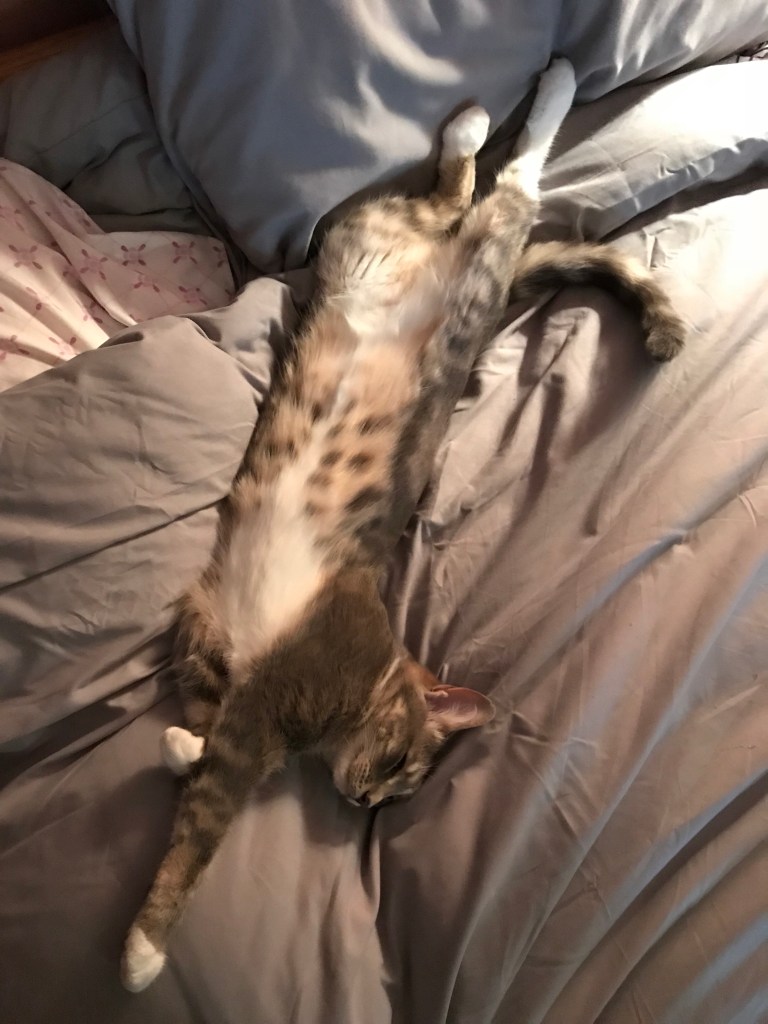
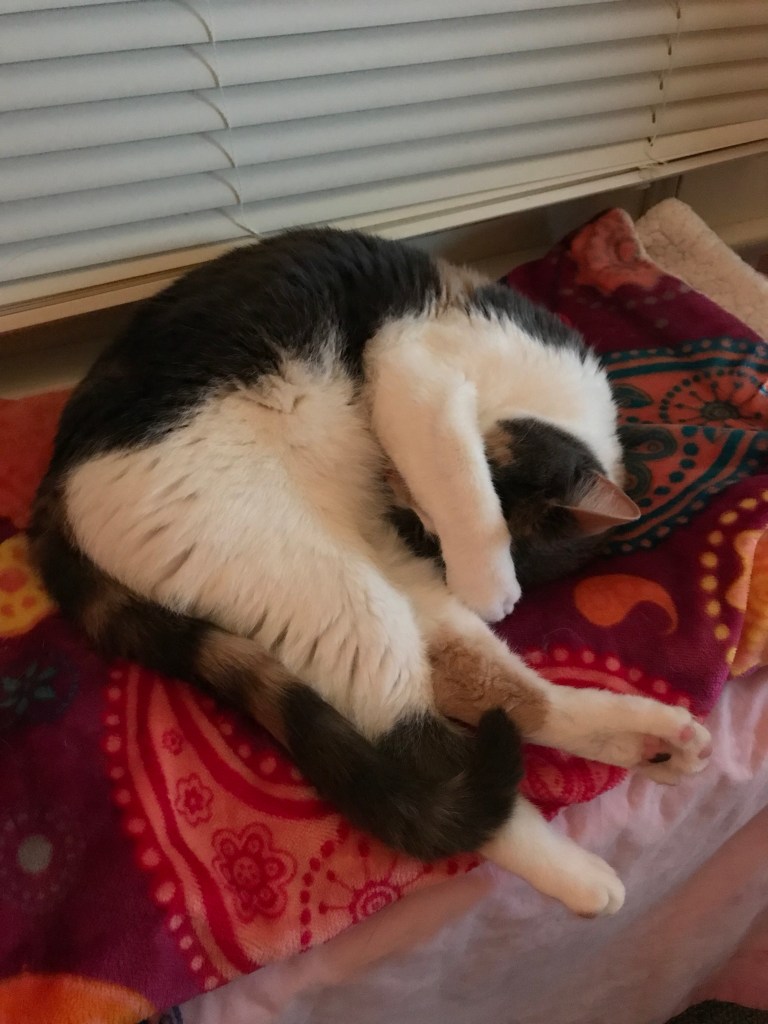
Most importantly, I will be able to snuggle these cats:

img_0272
Emma takes up the entire bed.

img_0273
Delilah covers her face sometimes to block the light.

Every day now, I go to my office and talk to loan officers and work on planning my classes.

I let go a little more. I know this is the right way to be.

The trail is wherever I put one foot in front of another. It is wherever I begin, each morning.

The sunlight on this morning was a gift, when I faced the work ahead, planning for my philosophy class in the Fall, and hoping it makes.

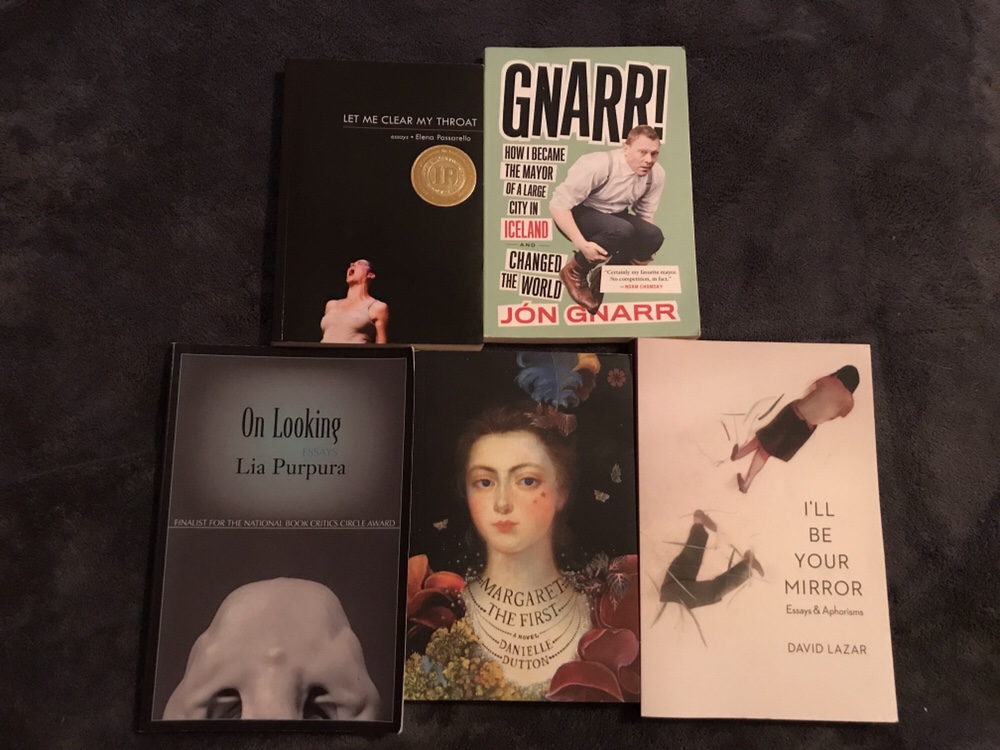
Tonight, while waiting and hoping that this house purchase goes through, I ponder which book I shall read first. For the first time in two years I am not reading about the trail, but instead choosing books from my shelf that I’ve wanted to read for months (or years).

img_0353
Hard to admit that I’ve read only bits and pieces of these books that I’ve long hungered to finish! Lia Purpura’s On Looking, David Lazar’s I’ll Be Your Mirror, Jon Gnarr’s How I Became the Mayor of a Large City in Iceland and Changed the World, Elena Passarello’s Let Me Clear My Throat, and Danielle Dutton’s novel Margaret the First, about one of my heroes, Margaret of Newcastle.

When it is time, I will begin again. And fortunately, I will know what to take, what to leave, and where I’m headed.

Best of all, I will know that I have a home to come back to that fits two adult-sized persons, two cats, and an indeterminate number of books worth finishing.

img_0354
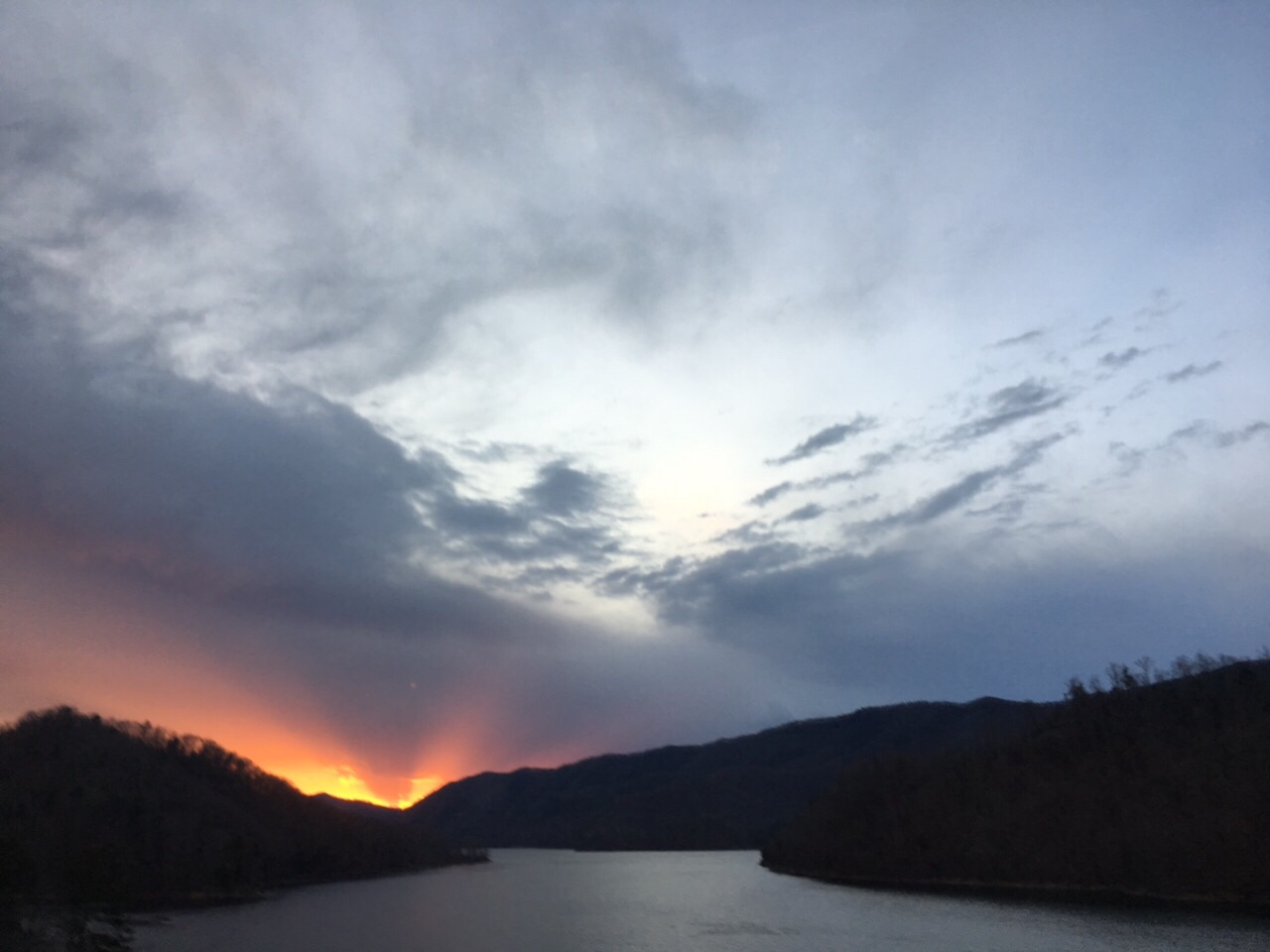
Sunset over the lake I cross every Sunday. Taken by my cousin, March 17.

: :

Fielding 003: The Livelong Day

Dick’s Creek Gap to Standing Indian Shelter : April 16 – 17, 2018 for 16.7 miles

This fielding is only for two days because they are a landmark for me in terms of the social aspect of the trail. Even though I had begun as a solo hiker, I had met up with three other hikers who were, for the first ten days of my hike, people I could count on to camp with and to share rides into town with.

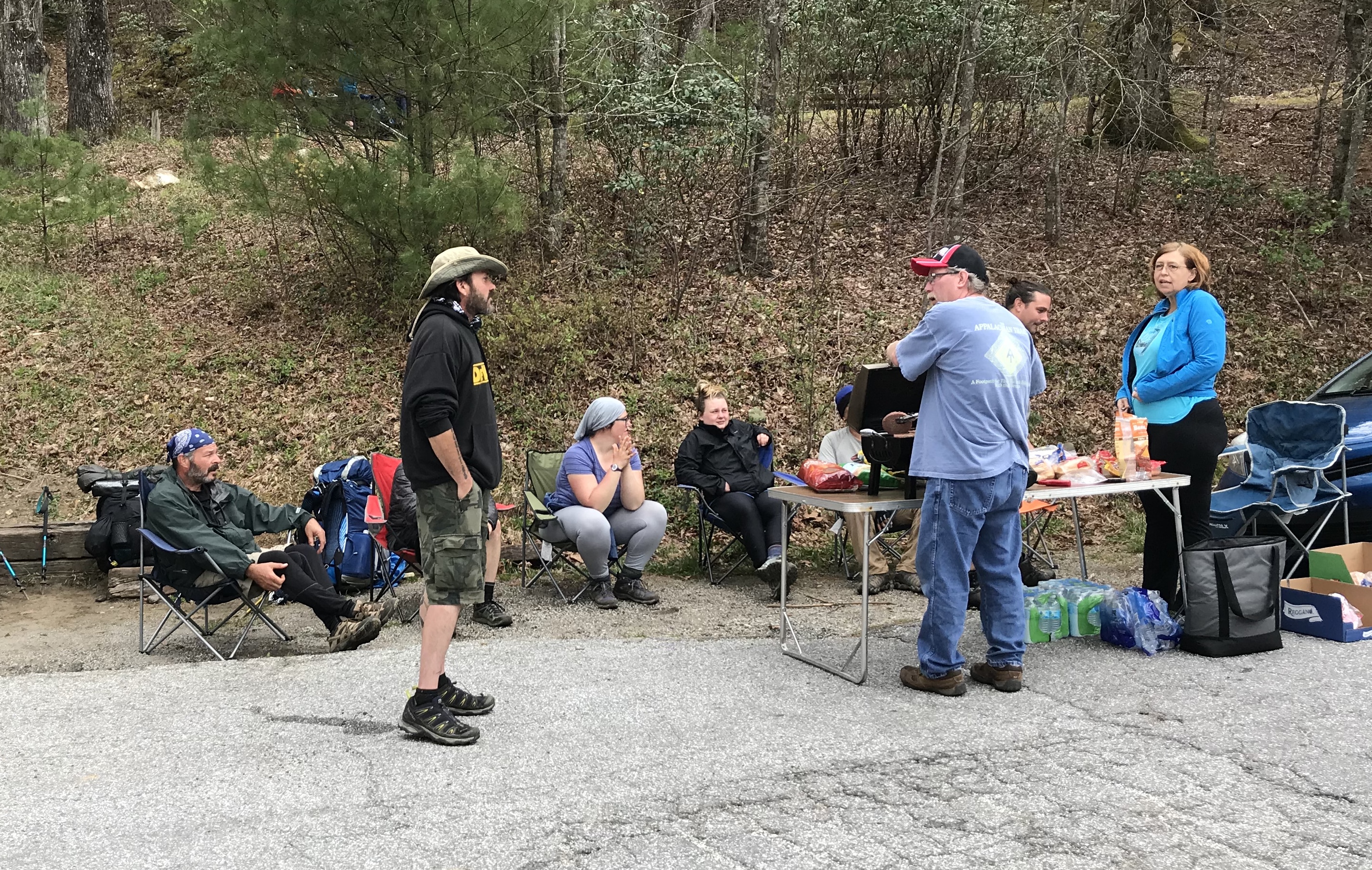
The AT hiking bubble is constantly evolving as people come on and go off the trail. In the photo below, a man and woman (to the right) set up a grill and cook hamburgers and hot dogs for hungry hikers. (This is called “Trail Magic” when people help hikers by feeding them or transporting them for free.)

But more significantly, this photo captures some of the people who had stopped at Dick’s Creek Gap on April 14 who were also coming off the trail that day. On the far left is “Ron Rico Suave,” one of my hiking friends. I don’t know the guy in the black sweatshirt. The girl with the grey head wrap is “Low Gear,” whom I’d later enjoy hiking with, and share a room in Franklin with. The blonde girl in black is “On Star,” who was the most organized hiker among us and who always knew where we were (hence her name.)

CC1D915C-B8CF-4D87-AE40-E2136C515B0B

“Ron Rico Suave,” along with “On Star” and “The Finder” had always hiked faster than me, so often they would make it to camp an hour before and be set up by the time I arrived. On our first day back on the trail from Helen, Georgia, they all agreed they were trying to make miles, and I had a feeling that meant we were about to separate.

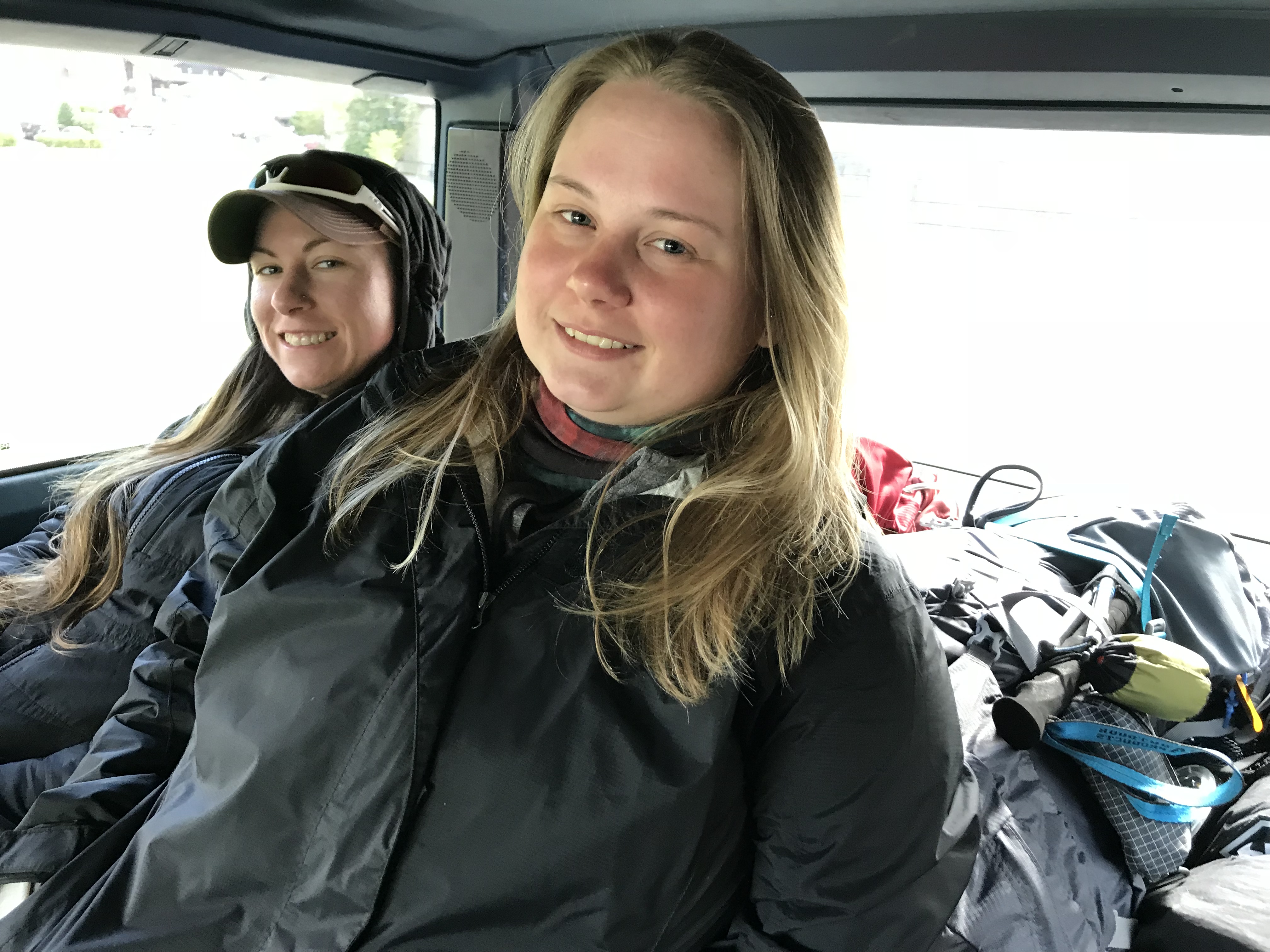
Here’s The Finder (left) and On Star (right) in the back of the van we traveled in to the Top of Georgia Hostel, where On Star had a restock package waiting for her. We all walked up to rejoin the trail which was a half mile away. From that point on, they hiked forward and I took my old sweet time.

ABC457AF-DED5-40AD-B20D-6513B6B84681

Day 11 – Monday, April 16 – Dick’s Creek Gap to Plumorchard Gap Shelter (4.5 miles, 73.5 miles from Springer)

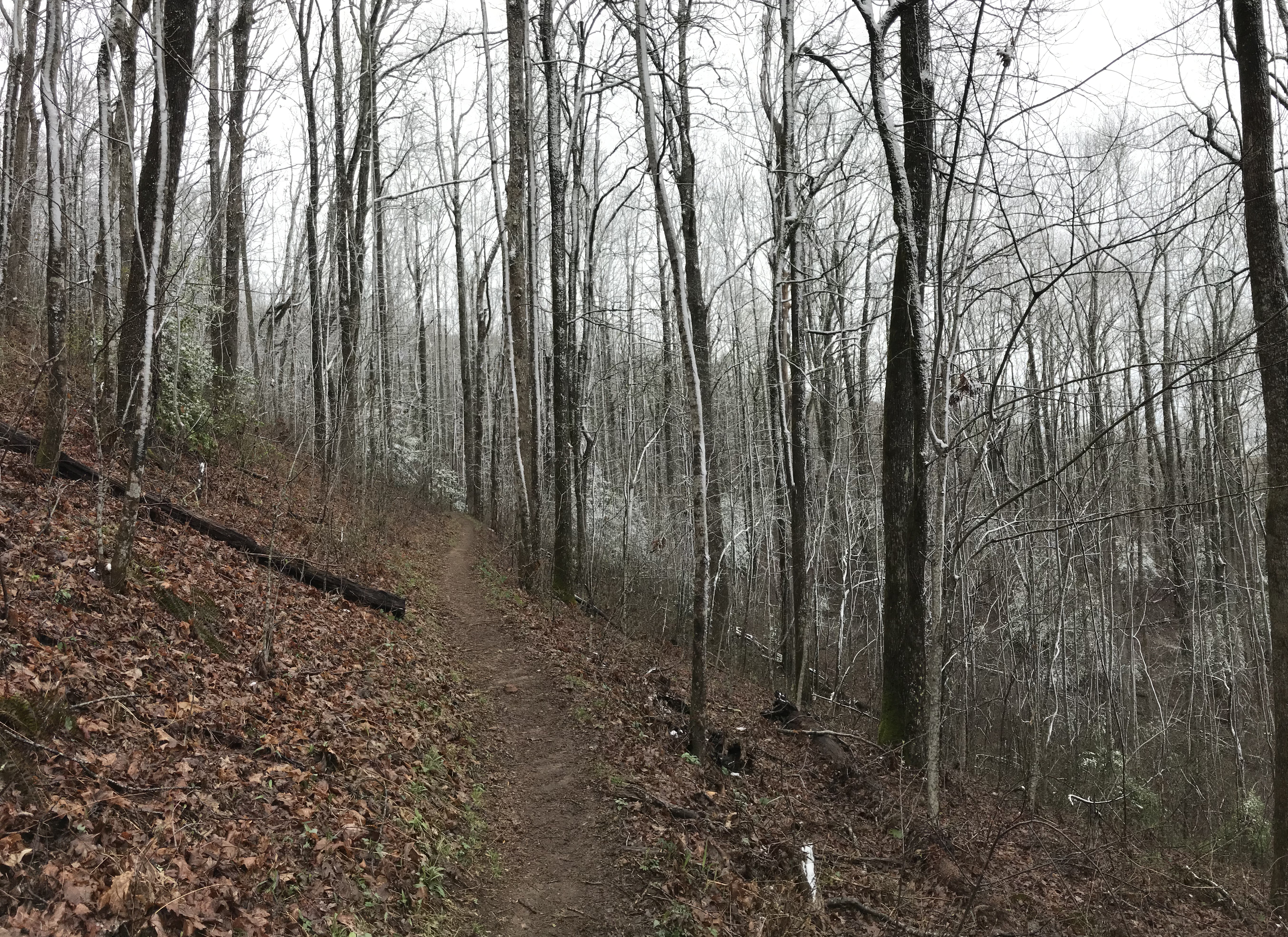
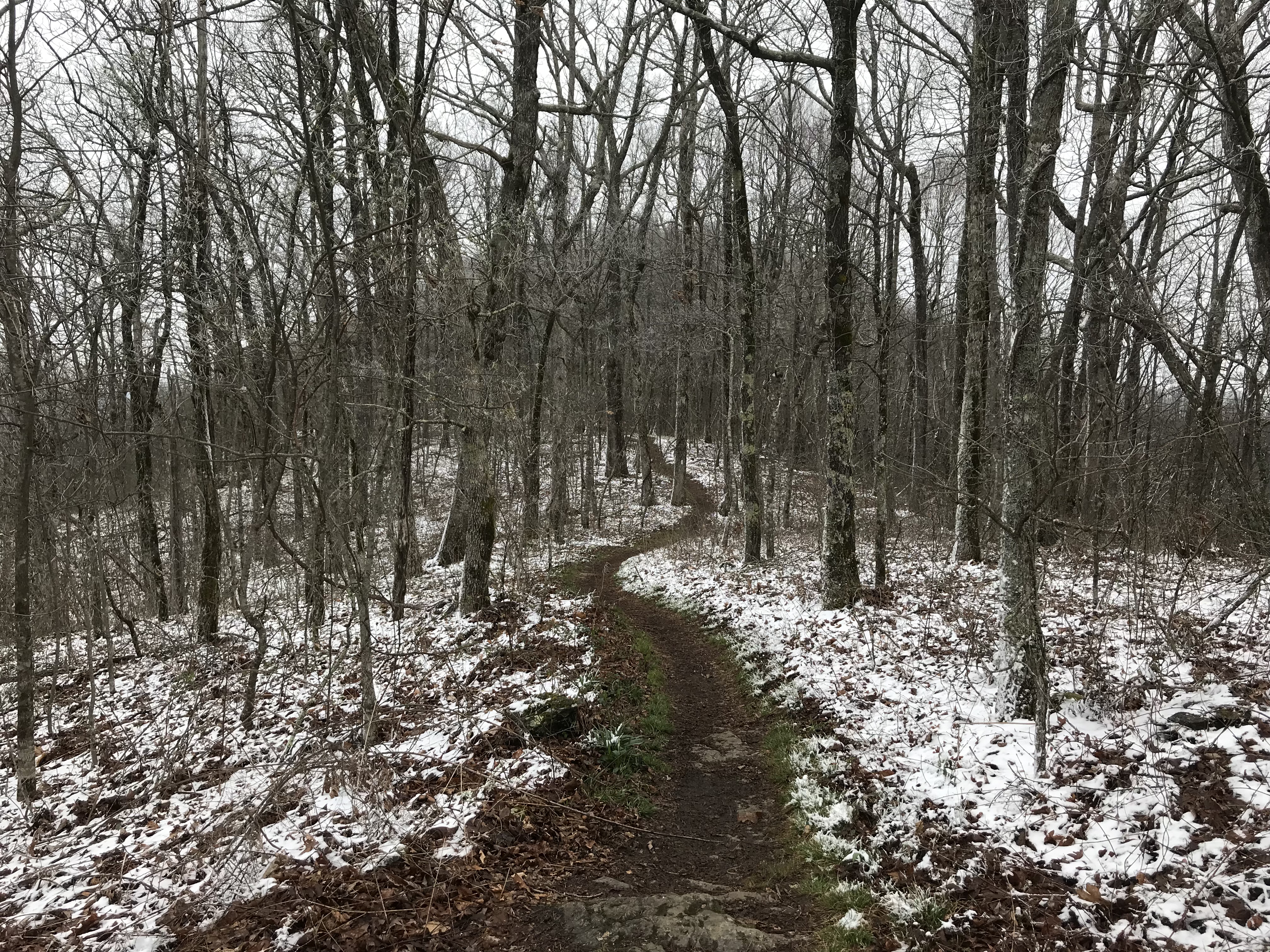
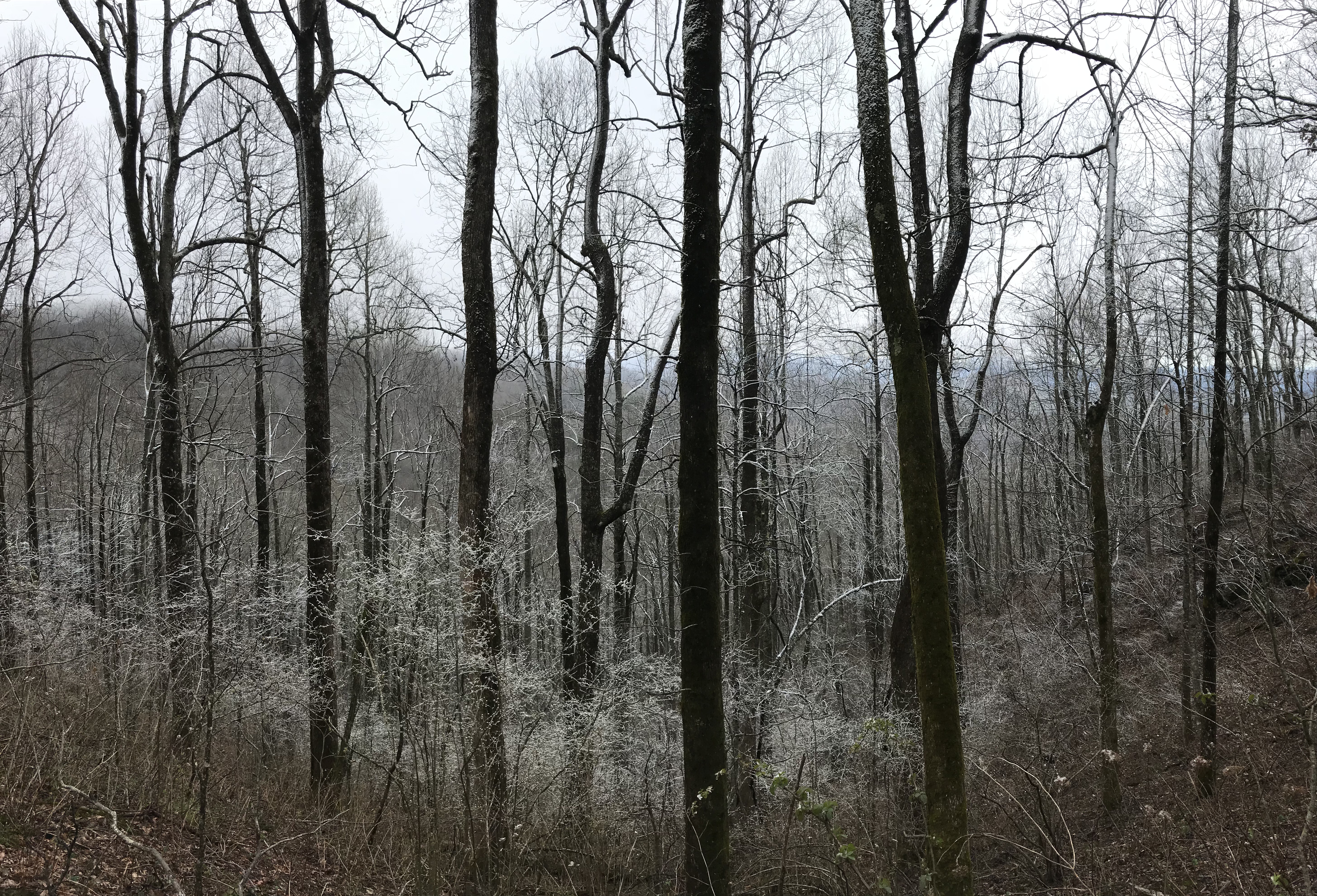
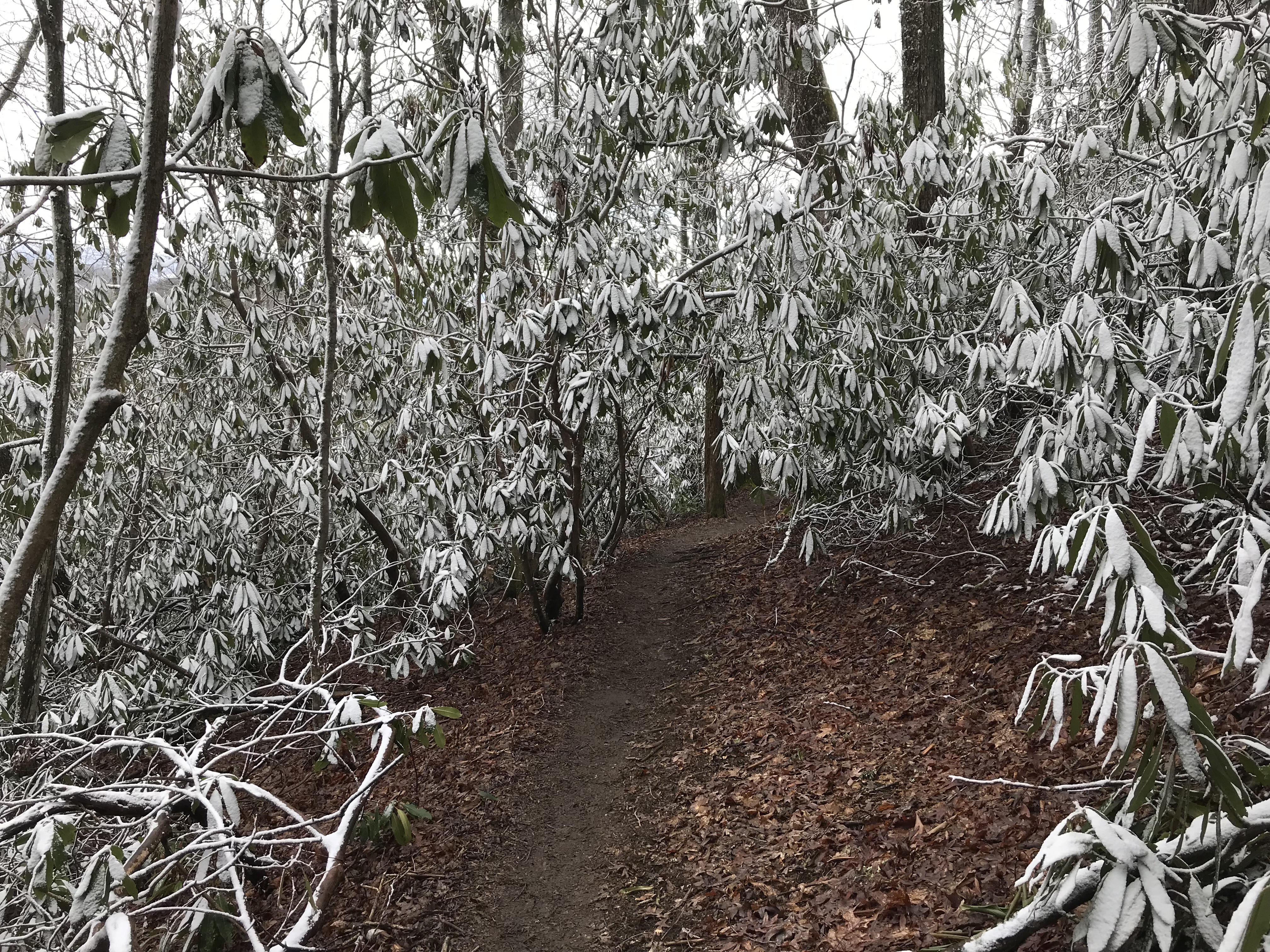
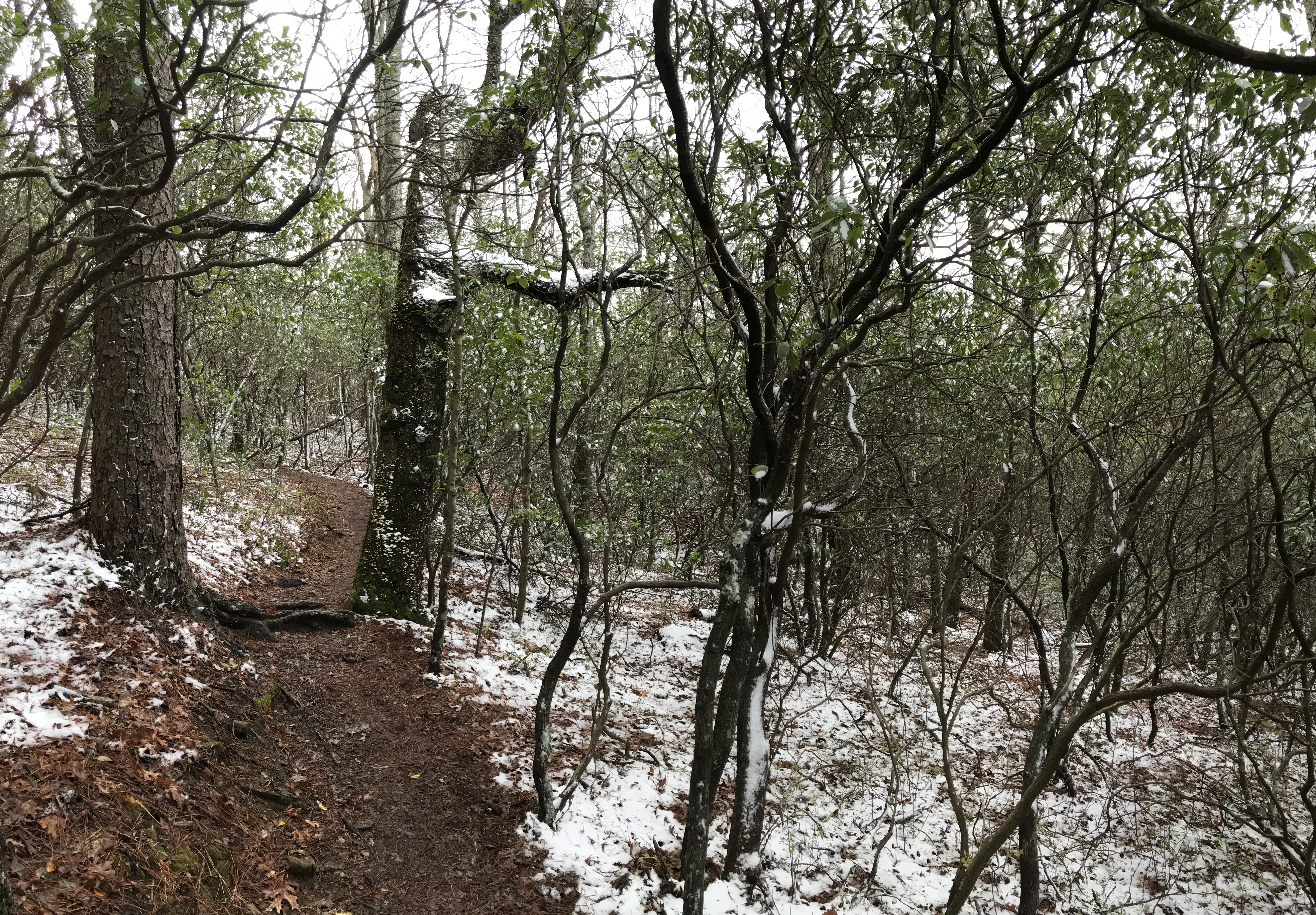
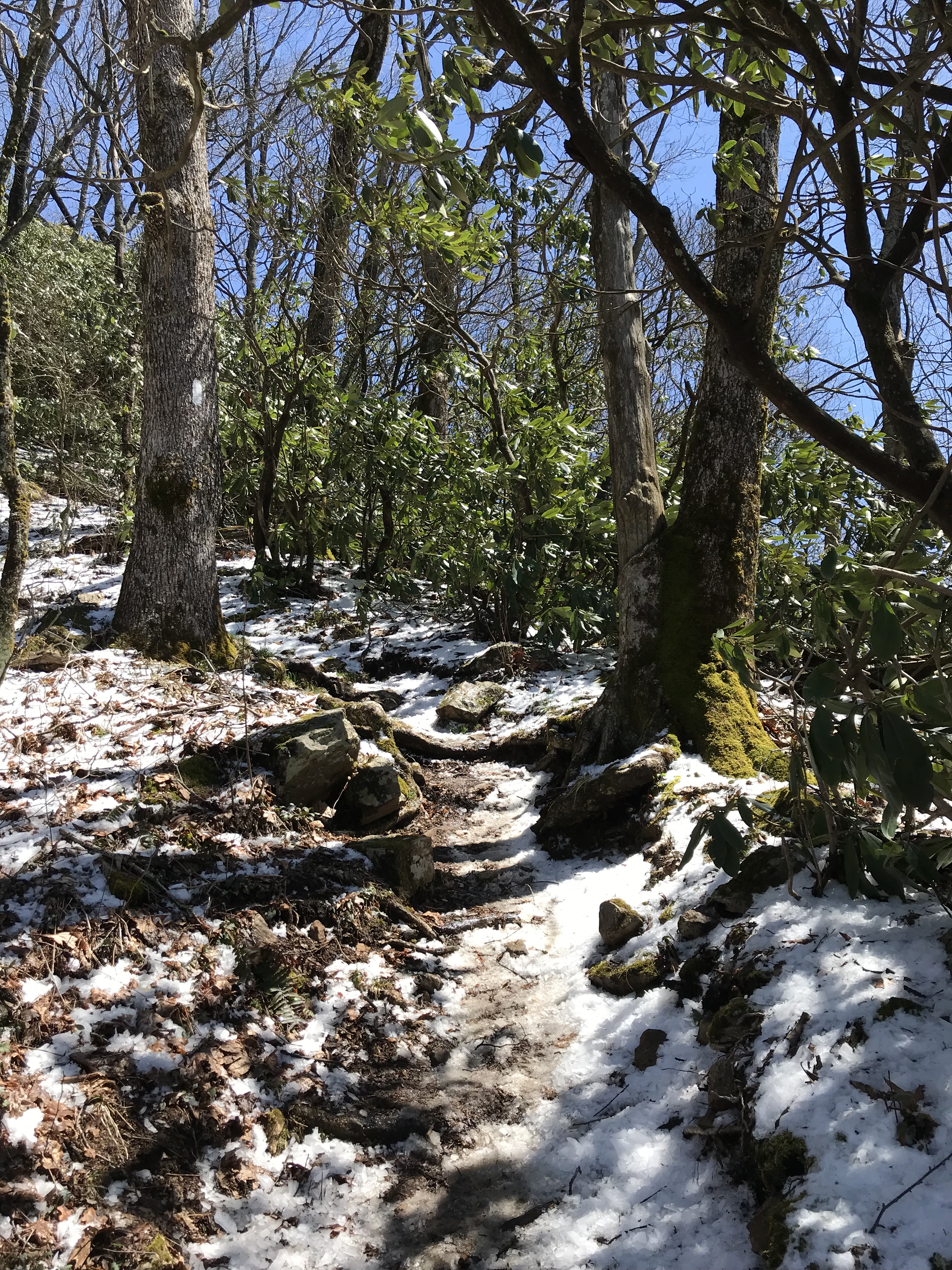
The hike this day was especially cold and windy. The trees were coated in snow and ice which made for beautiful scenery.

059CAC2C-B180-4622-8ED4-4ED5FCB3F9C6

E4BB289A-F049-4B9C-8C5D-46C39EDC9532

5EBFB8CC-8227-43AC-9397-754DBD80E788

DAA470C3-1D1E-4C19-8C45-A731A13342E7

D5B27A26-6CBB-491F-9521-17A8564BA97E

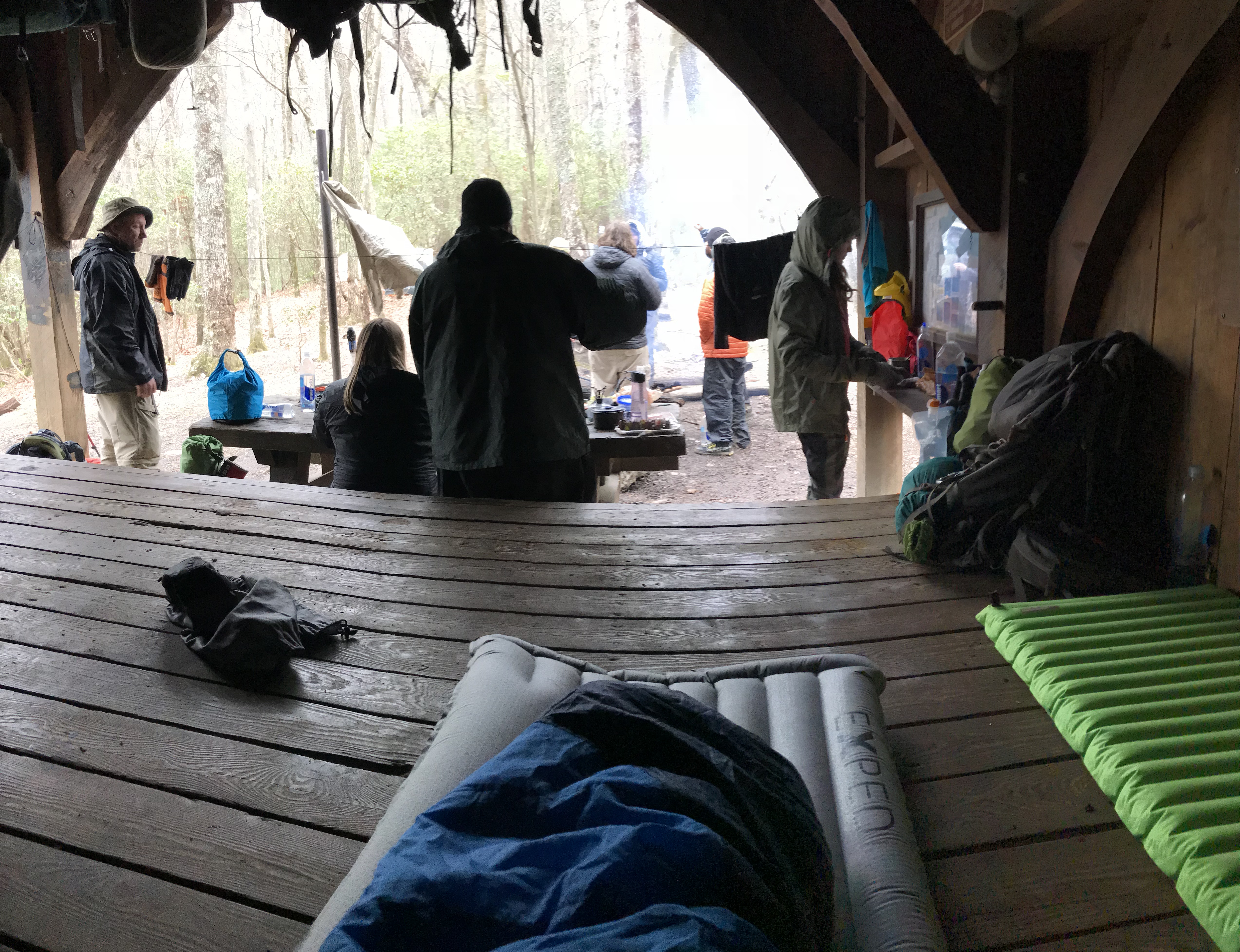
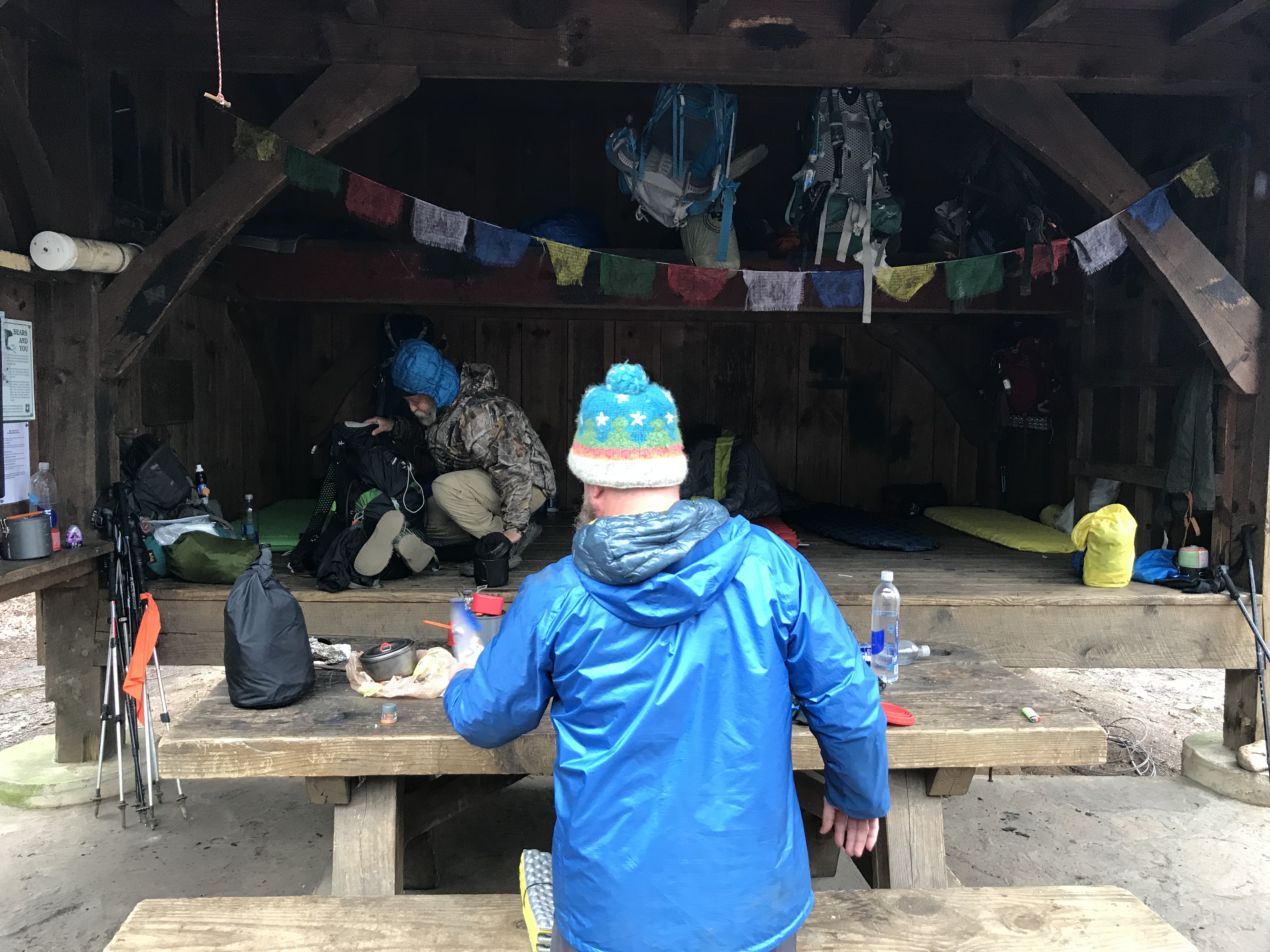
The shelter that night was startlingly cold, probably somewhere in the 20s. If it had not been for the fire, I would have shivered all night. We all opted to sleep inside the shelter, though in hindsight, I would have preferred the nominal warmth of a windless tent.

F1E1744E-30E9-4BA2-92E4-08CE291803EB
The view from my sleeping bag. Ron Rico and On Star are cooking dinner at the table. I had gone stoveless at this point, so it was granola bars and meat sticks for me.

1F5889EC-F58A-4CB3-AAE0-BD63A053B8DF
Tune Up kept everyone’s spirits high that evening and added prayer flags to our shelter.


Day 12 – Tuesday, April 17 – Plumorchard Gap Shelter to Standing Indian Shelter (12.2 miles, 85.7 miles from Springer)

The next day was slightly warmer, although the remnants of ice (that had fallen from the trees that morning) were everywhere to be seen. Because I hiked more slowly than others, I was mercifully spared the pelting that others received as a result of the ice falling from the warming trees.

CE14AAC7-FCB8-4139-9E45-E064CCDA0CCC
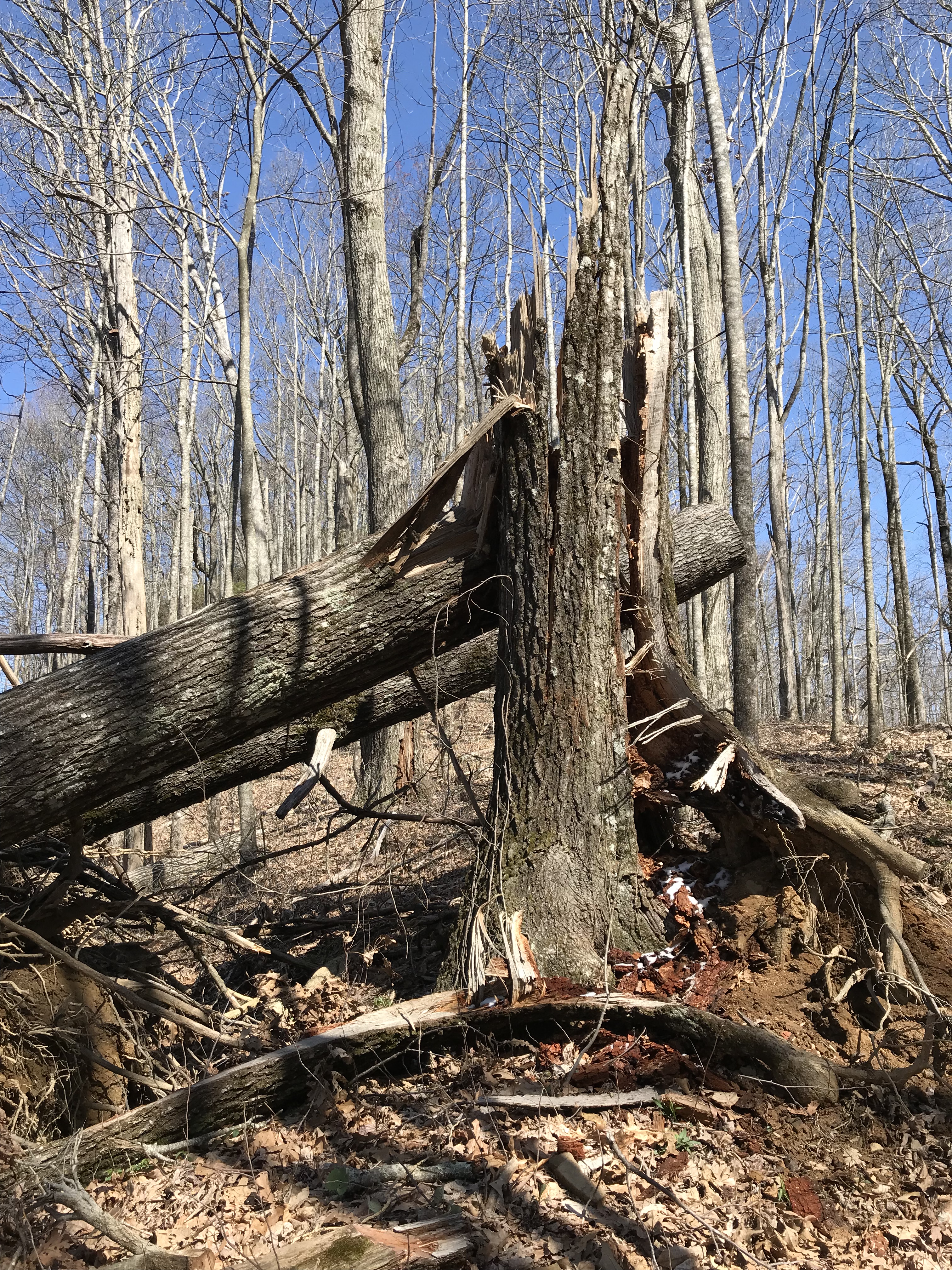
Evidence of the tornados that had swept through three weeks ago could be seen everywhere.

1D0778D9-3AE0-4C92-B9F8-999E3B44FAD1
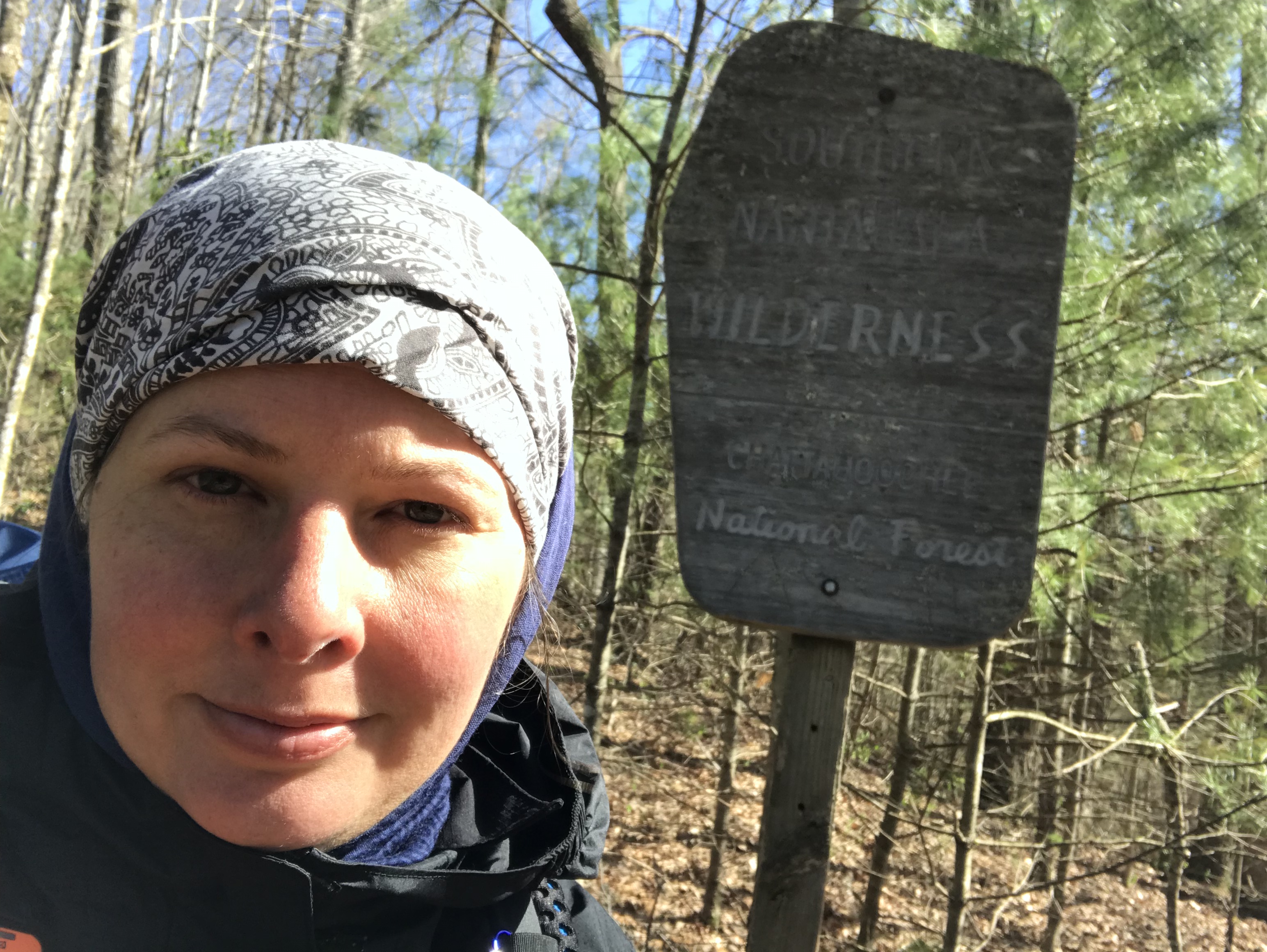
Entering the Southern Nantahala Wilderness was a big deal for me because it meant I was close to leaving Georgia.

AB80B176-8FFB-4EA5-8C51-316763A25845
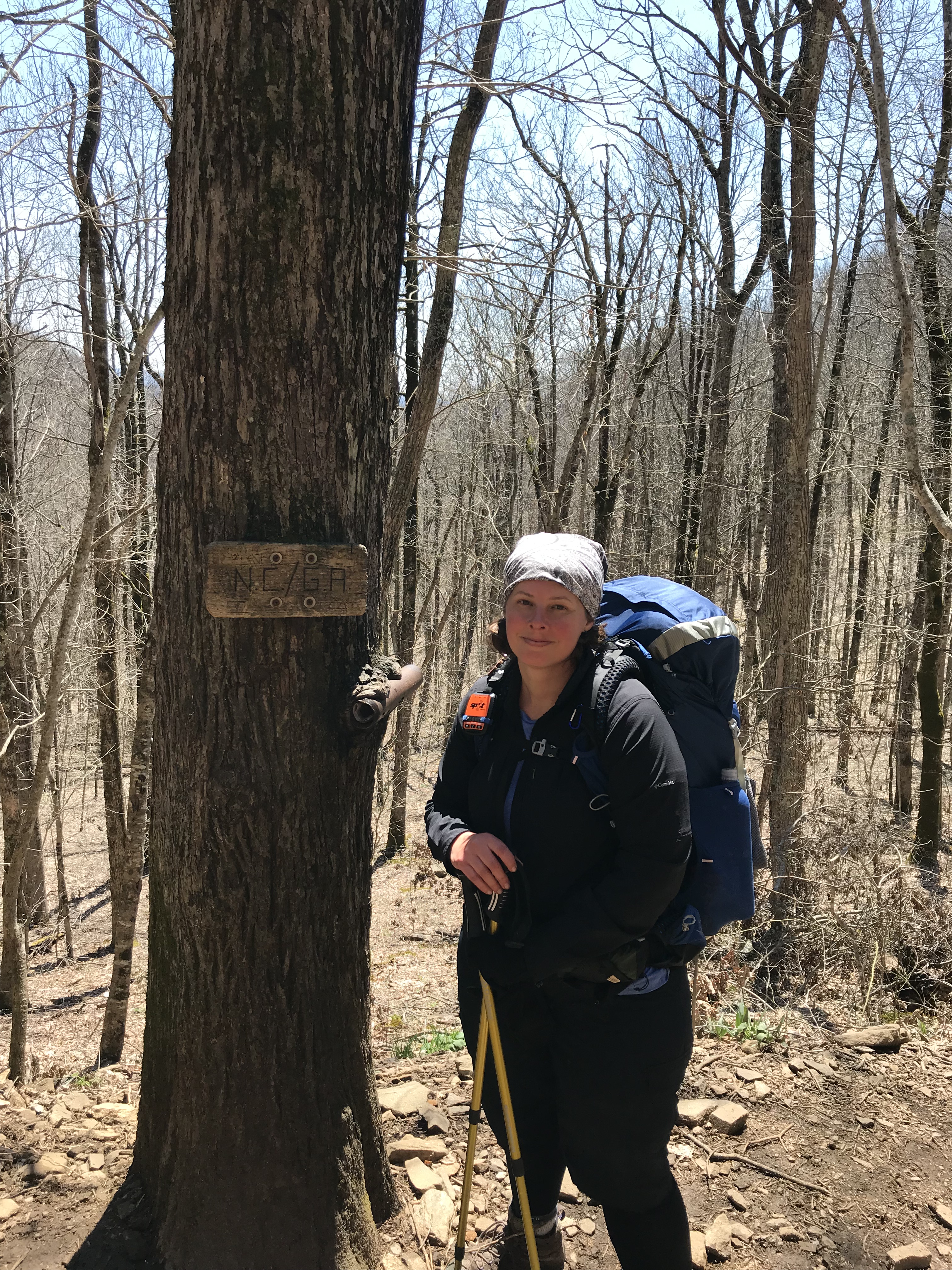
Finally! Out of Georgia and ready for North Carolina. It’s good to clear the first state of the AT!

0F2706C2-2B70-4DBB-80D7-72B923F815A9
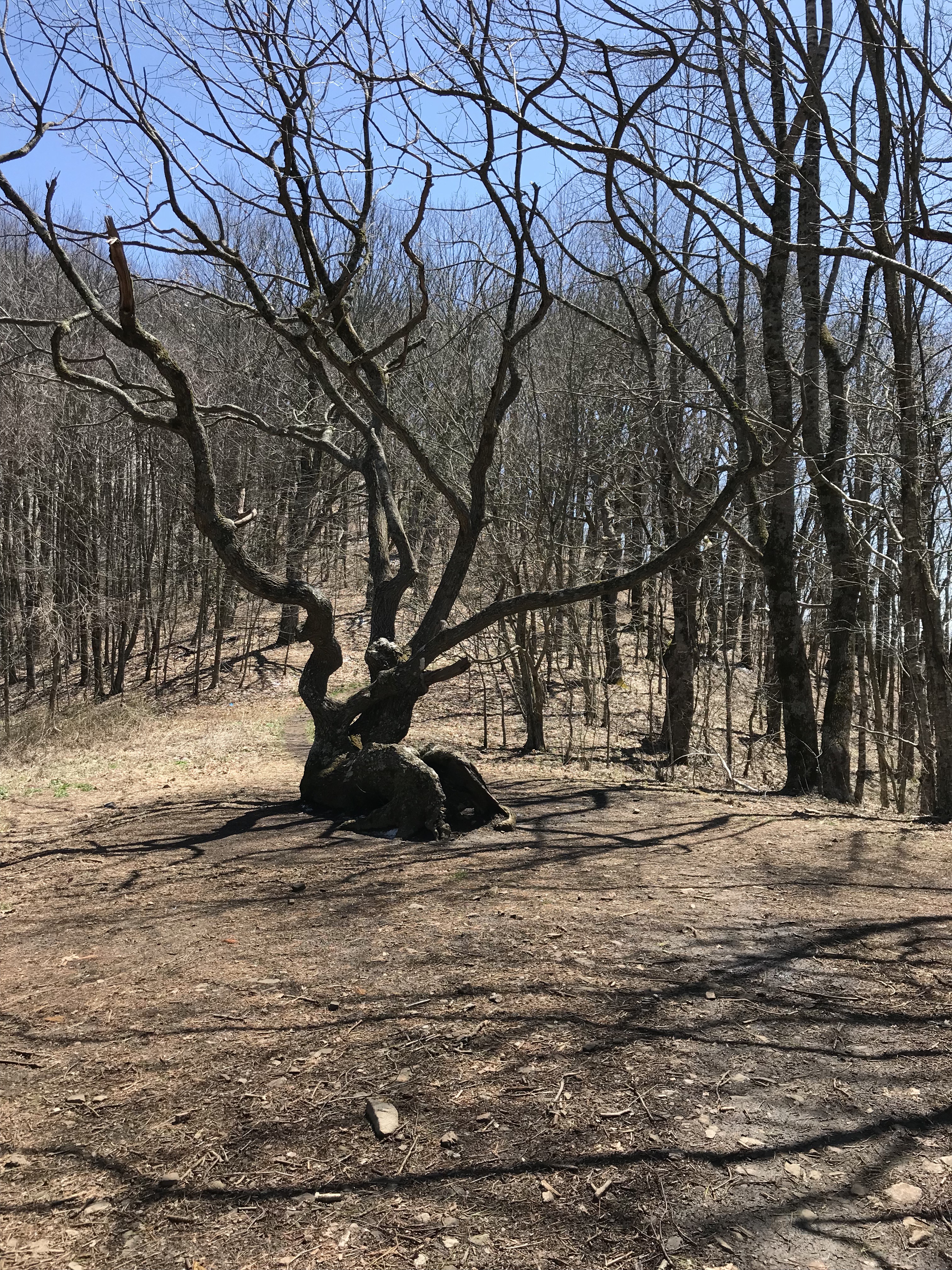
A beautiful but strange tree at Bly Gap.

E63FB05A-384D-4F4E-841B-90CC304946B5
As I began to ascend the mountain (Sharp Top) I begin to worry a little since the elevation is high and the ground is coated in ice.

52ECEC95-AA1B-4FD8-9E02-FEAF9532A389
This is the ice that had pelted my friends hours before.

B3A33F01-B942-40BA-A2E8-76273F61113D
I could just see myself sliding off the mountain so I went slowly.

F803991E-9C86-402D-B250-0C04CD525A86
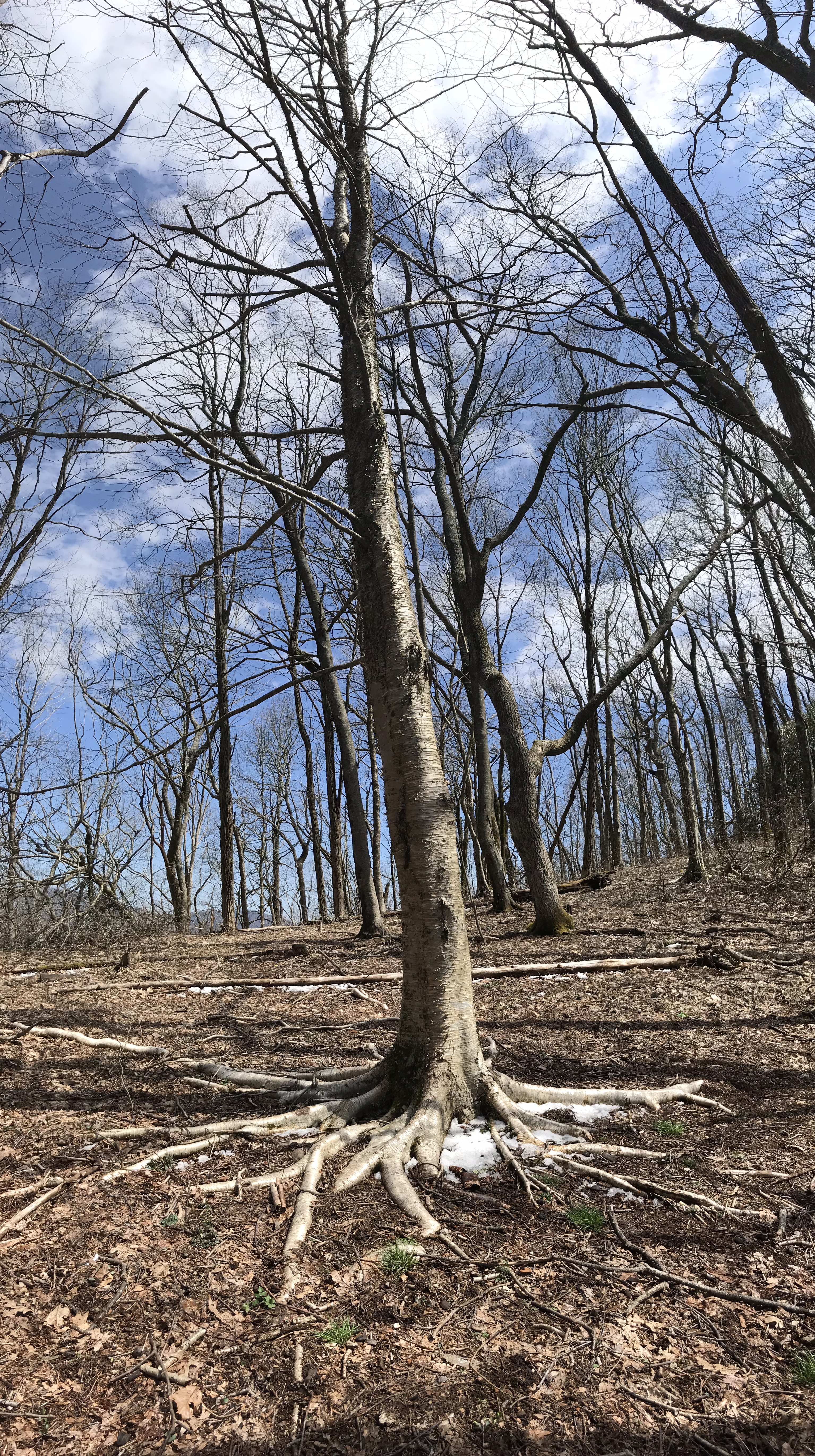
A beautiful tree whose roots seemed to resemble an octopus.

C204DDAF-817F-4A5F-B334-50C45E921B12
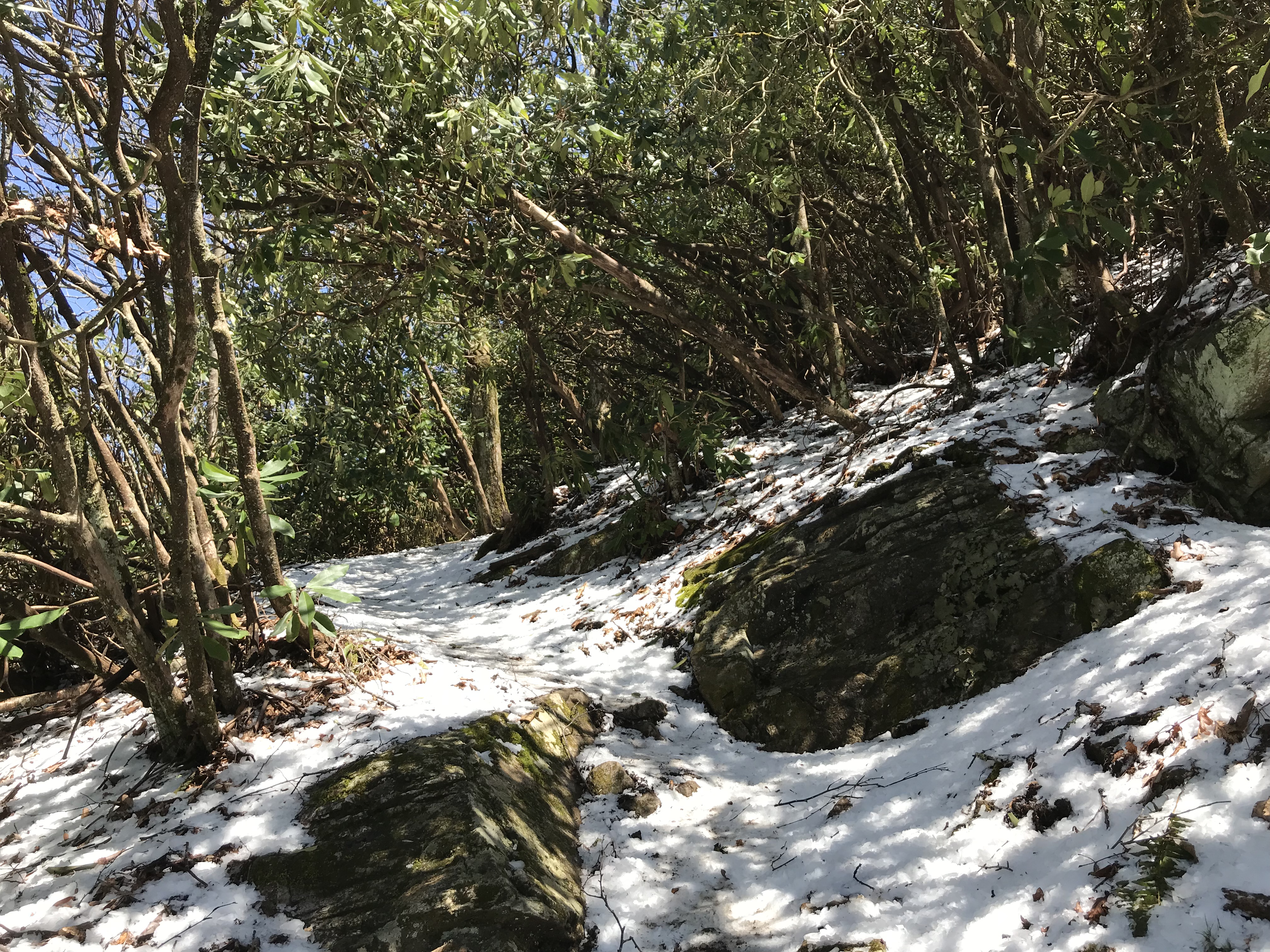
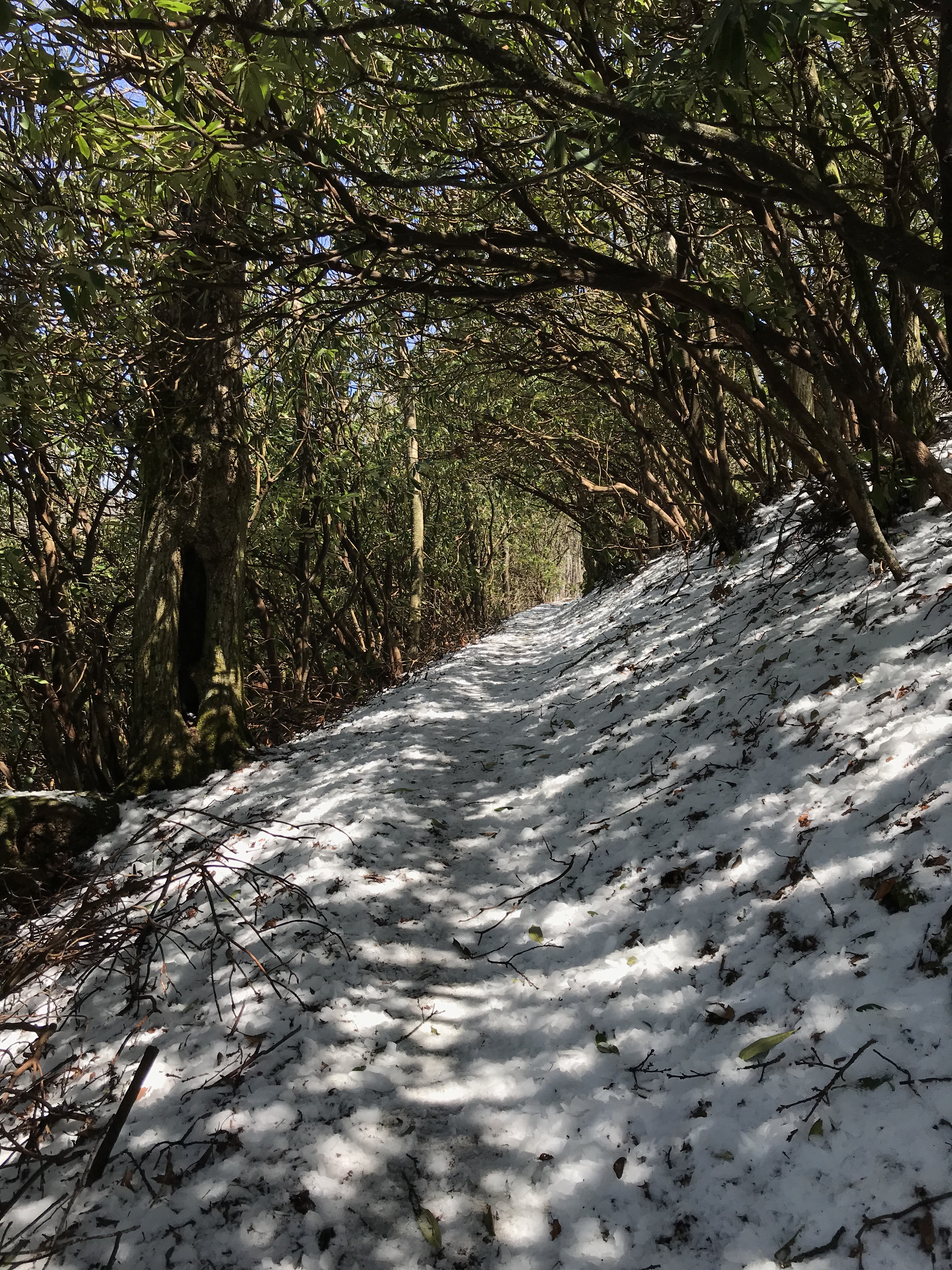
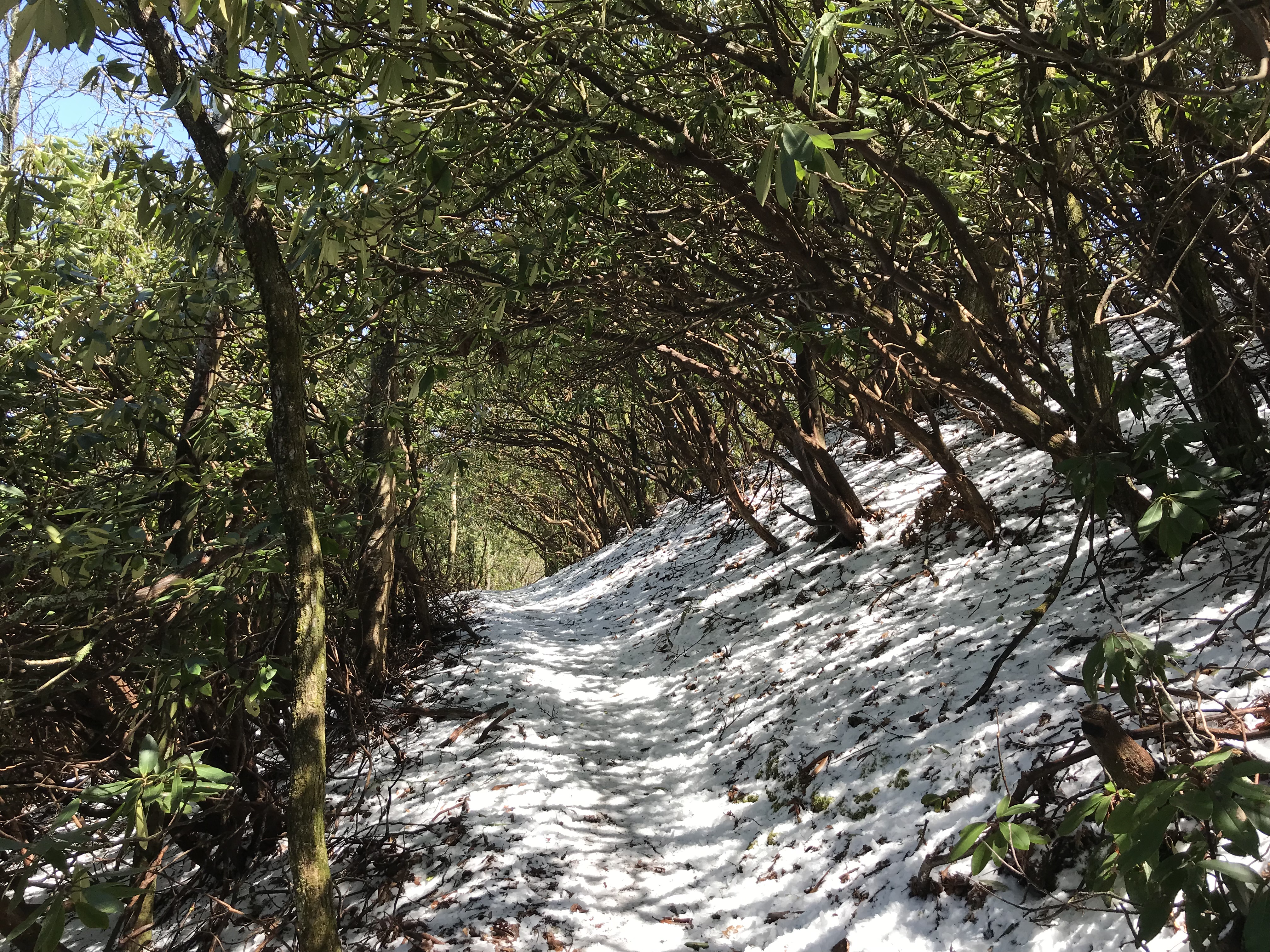
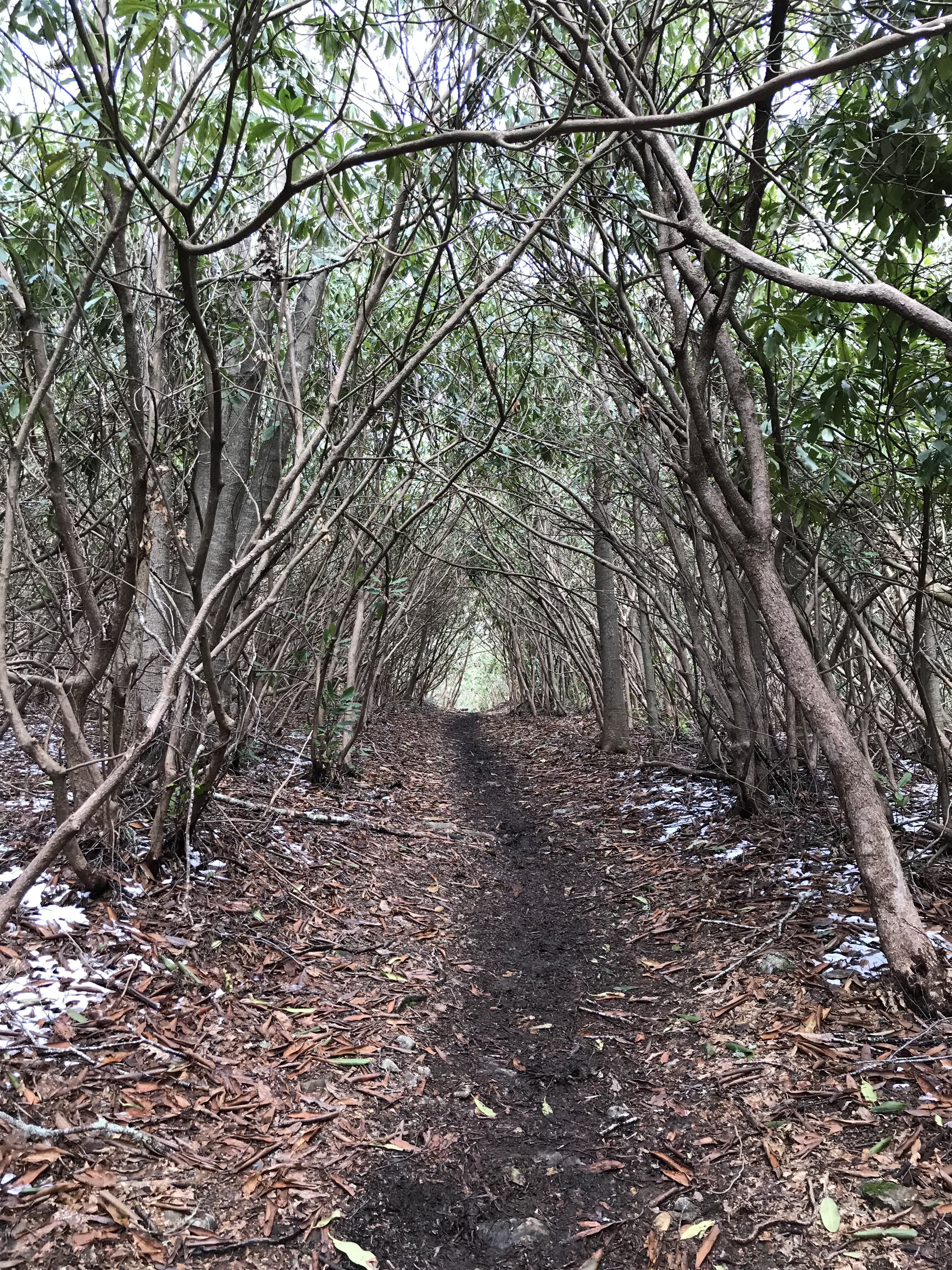
A lovely rhododendron tunnel carpeted with ice.

6A5AD01A-AF0B-4350-86CE-652DE29AB427
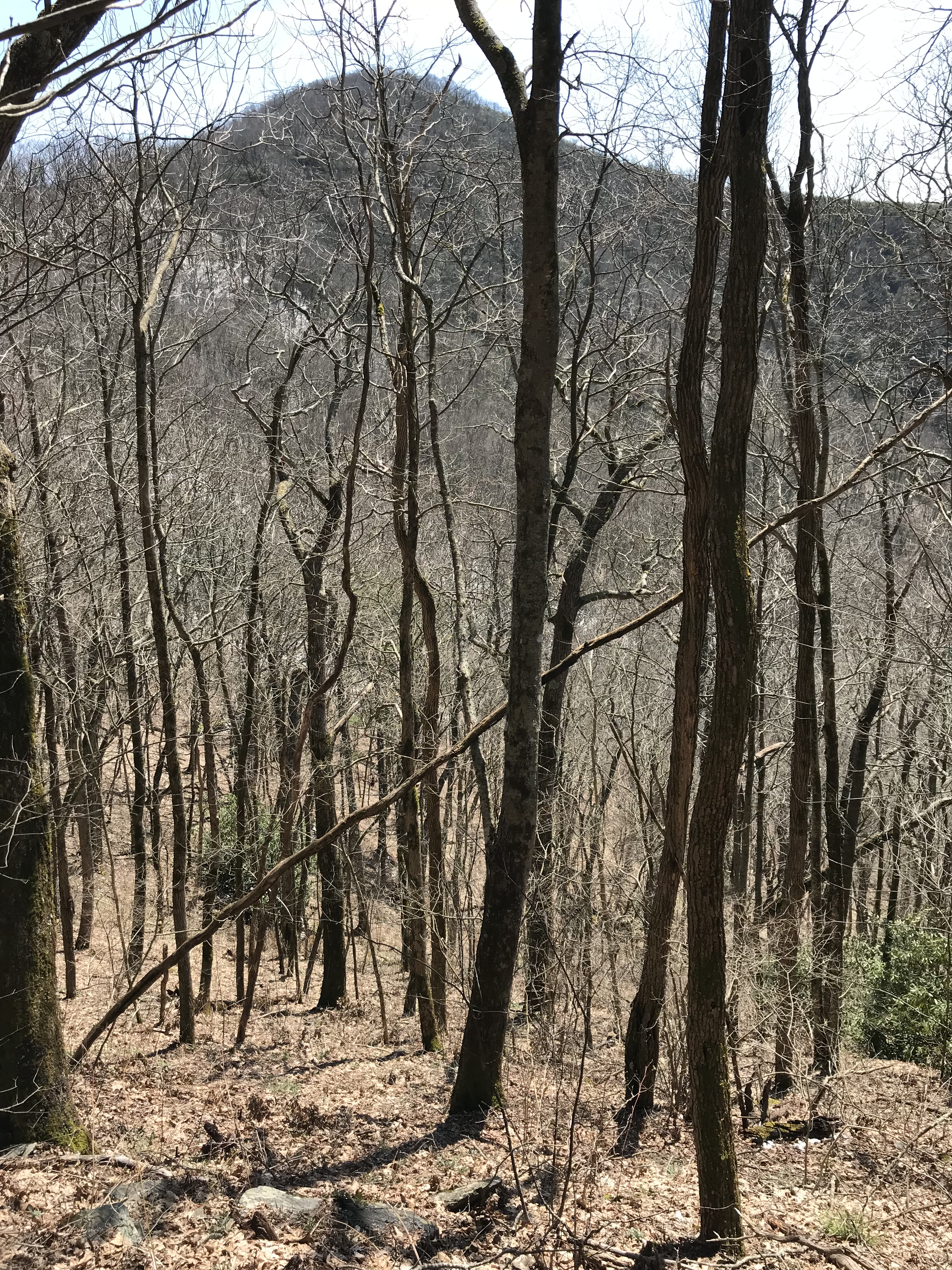
It’s impossible to communicate the depth of this picture and the vertigo I felt.

D8B01FF3-7893-4CDE-8670-7FF082732B69

37885E2A-5F0C-43CC-84DA-0BD01E5CEDC3
Sometimes I was able to simply be grateful to be in the woods instead of sitting at my desk.

DD0C3F85-D1BC-4F6F-ADC0-01582B666C61
I’m a huge fan of rhododendron tunnels. Fortunately the AT is filled with them.

2716AF31-7D37-4167-AB41-86D6EFFFBE0A
Sometimes the trail isn’t really a trail, but a path up or down or over a pile of rocks.

5D4A294D-17D7-4D13-9689-485A327BBF47
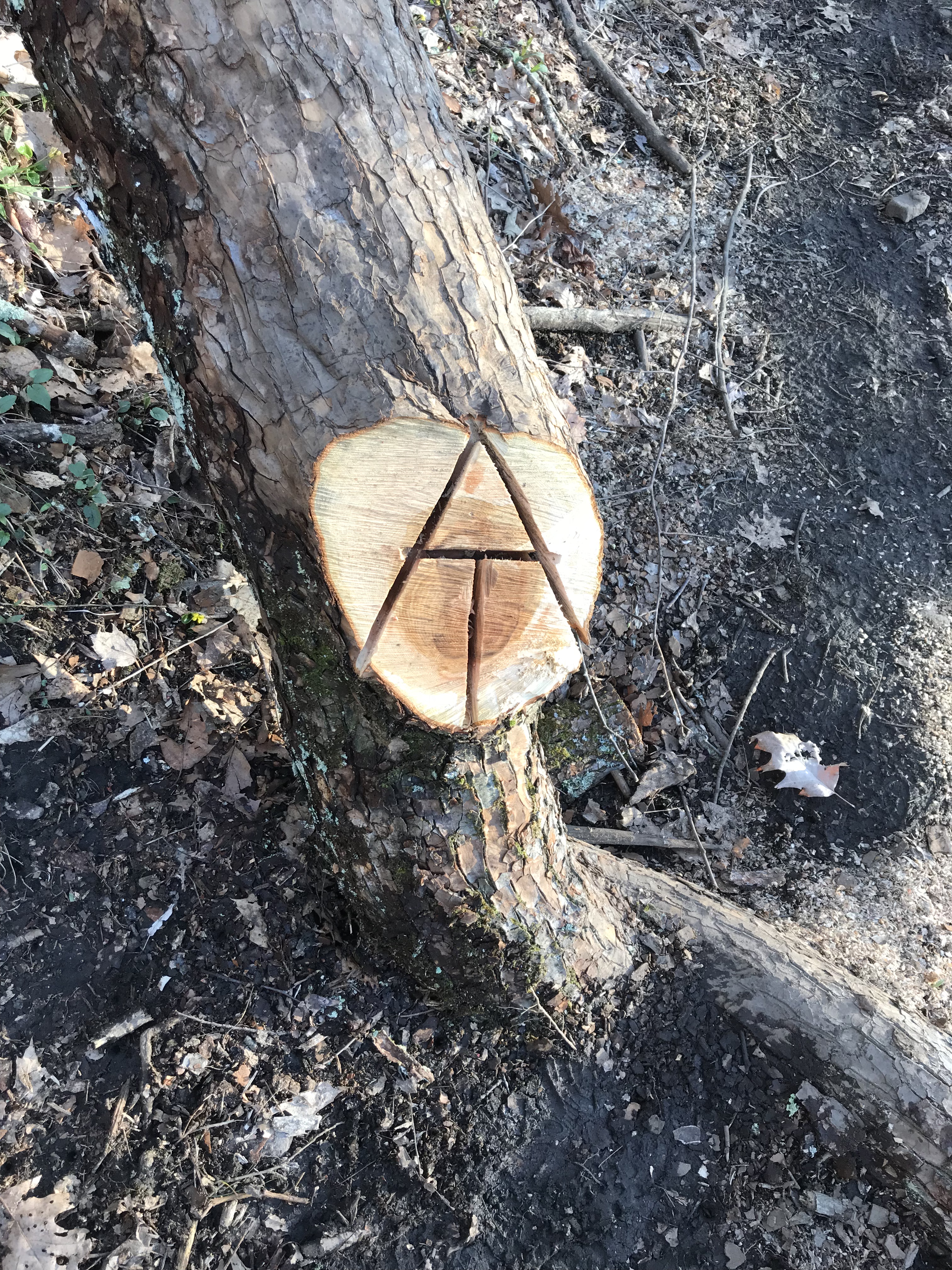
A creative woodcutter marked the log with the AT symbol.

D5CBFDF5-B7F8-4AE9-BD5B-55C851B76B7C
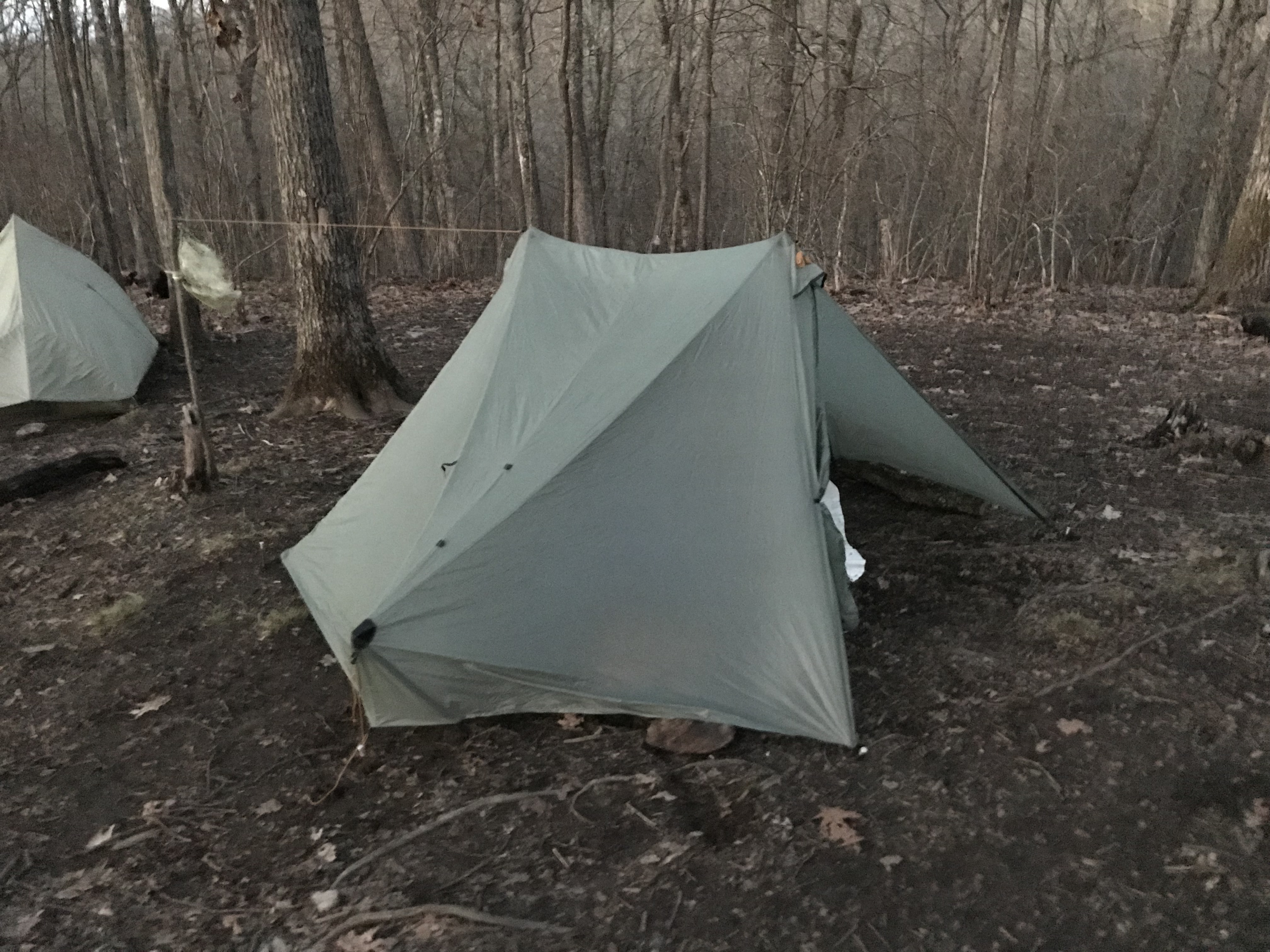
My tent, set up at Standing Indian Shelter, after a 12.2 mile day.

The part of the story that you aren’t getting is how I came to hike my longest day so far. My friends and I had agreed to hike to Muskrat Creek Shelter and stay for the night, but when I arrived, I realized they had hiked on.

It had been a gorgeous day for hiking and I just imagined that they had arrived at Muskrat Creek Shelter (nothing to write home about) and had decided to make the most of good weather and hike on. I did the same, but pushed myself beyond my comfort.

I arrived at Standing Indian Shelter late with the encouragement of a hiker named Overkill who was moving at the same pace I was. He got his name because he had started his hike with upwards of 80 lbs in his pack. He carried a shower (!) along with other things most thru-hikers abandon days into their hikes.

My friends looked at me piteously when I rolled in, and I don’t think I ate dinner, just set up camp and went to bed. The next morning I decided that if they hiked on again it was for the best, since I didn’t want to keep them from making it to Maine. I had already accepted that I wasn’t going to have time to make it that far, so I did not want to hold anyone back.